go back
last VISITS by COUNTRIES

20829 UNICORNS 🦄 PEACE! ☮️

back

THOMAS SANKARA

The Voice of Africa. The Voice of the World. Nonconformity is the only way forward unless there is a miracle in the political sphere pffff won...
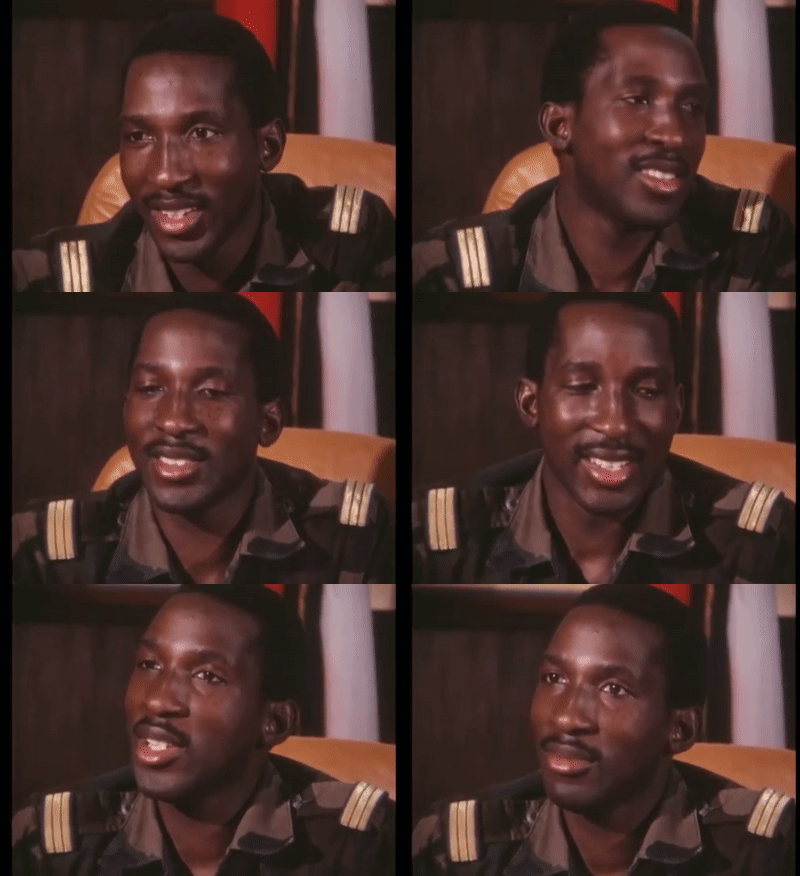
thomassankara.gif

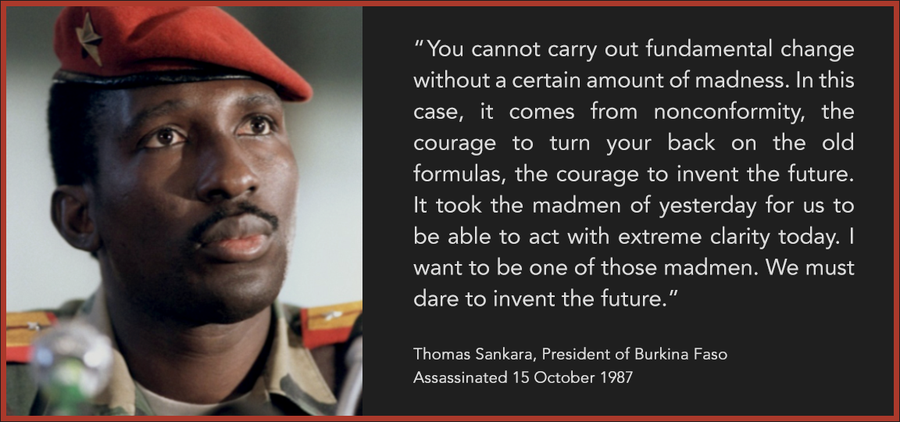
You cannot carry out fundamental change without a certain amount of madness. In this case, it comes from nonconformity, the courage to turn your back on the old formulas, the courage to invent the future. It took the madmen of yesterday for us to be able to act with extreme clarity today. I want to be one of those madmen. We must dare to invent the future. - Thomas Sankara

Under Thomas Sankara’s leadership, Burkina Faso went from being an unknown country to being the envy and center of attention of the world. Here are just a few of what Sankara and his comrades were able to achieve in four short years of leadership:

– A nation-wide program of expanded vaccination called “Operation Vaccination Commando” was carried out between 25 November and 10 December 1984. In two weeks, over 2.5 million children (including children from neighboring countries) were vaccinated and immunized against three deadly epidemics, namely meningitis, yellow fever, and measles. This was a prowess never heard of in Africa before, if not in the entire world.
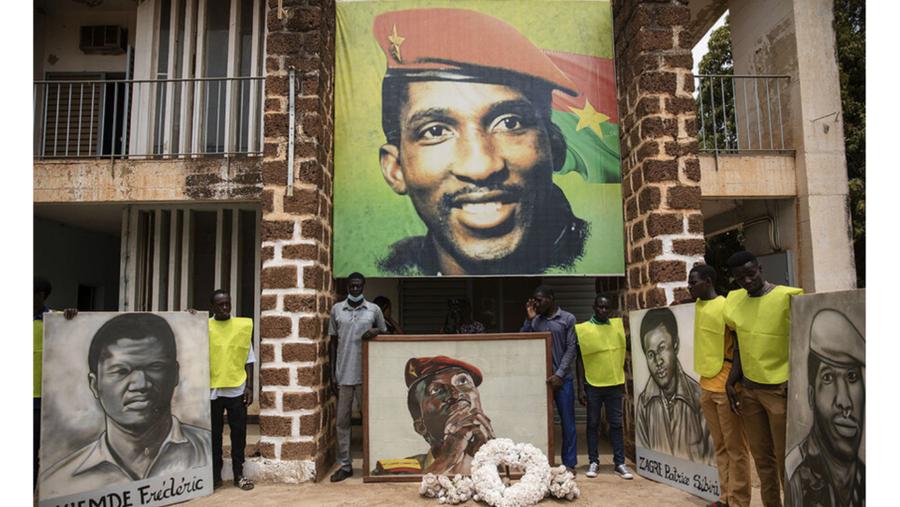
thomas-sankara-inspires.jpg

– A nation-wide literacy campaign was initiated, which helped increase the literacy rate from 13% in 1983 to 73% in 1987. School fees became so low during that period that students were coming from many other African countries to study in Burkina Faso.

– Over 10 million trees were planted during Sankara’s presidency to prevent desertification. Sankara made planting trees a non-negotiable condition for entering Burkina Faso, even for diplomats.

– Sankara appointed females to high governmental positions and encouraged them to work in fields that were once exclusively reserved for men. This made Burkina Faso the second country in the entire world to have the highest number of women occupying high leadership and governmental positions.
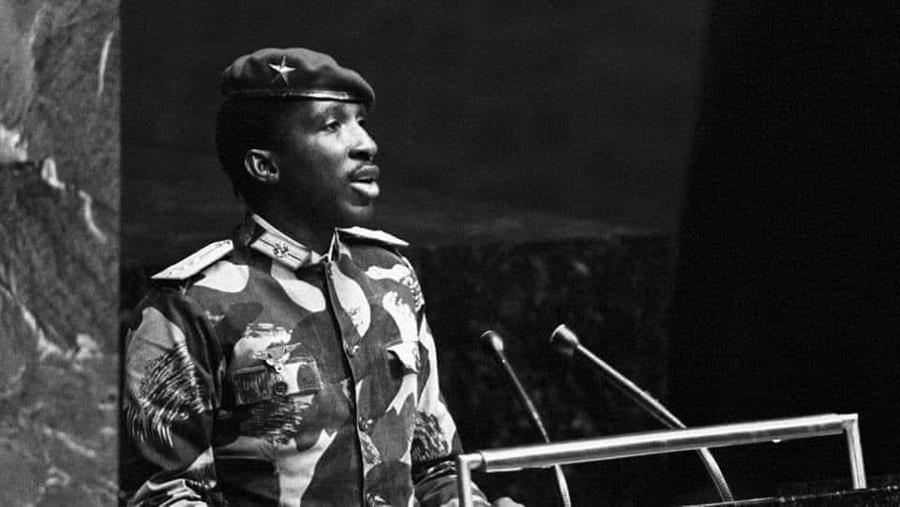
thomassankaara-greatman2.jpg

– Sankara supported women’s rights by outlawing female genital mutilation, forced marriages, and polygamy, and job discrimination. Men were also encouraged to do work that was once seen as exclusively reserved for women.

– Land was taken from the feudal landlords and redistributed directly to the peasants. Wheat production rose in three years from 1700 kg per hectare to 3800 kg per hectare. Thanks to this bold initiative, the country was able to achieve food security in less than 4 years of leadership.

These were just a few of the many big positive changes that Burkina Faso experienced as a result of Thomas Sankara’s leadership. But I believe Burkina Faso would not have achieved those results if its leaders had behaved like the leaders of a small and poor country. True, they might have been poor materially, but spiritually and intellectually they knew they were a rich people. They never allowed themselves to be limited by their past or present circumstances. They were realistic, but they also understood that realism is not synonymous with laying low and hoping for the leave and favor of others.

greatmansankara.png

Sankara and his team were ambitious. They dared to dream big. They dared to dream seemingly unattainable dreams. But Sankara and his comrades did not manage to take their country forward in four short years just because they had big dreams. Their achievements were also the result of the fact that their dreams and aspirations were backed by their intention to put others first. In other words, their dreams were others-oriented.

Always think of yourself less…

Thomas Sankara, in particular, was a big dreamer who loved to do things on a grand scale. And he defined himself as someone who dreamed giant, seemingly unattainable dreams. That’s right. Asked who he was and how he would define himself, this is exactly what Sankara said to a journalist in April 1986:

“Defining oneself – that is the most difficult thing to do. First, because you are never sure of making out what you really are. I think there are three ways of being: as others perceive you, as you perceive yourself, and the truth which lies between these two views about the same individual. As far as I am concerned, I am sure that I am an amalgam of projects, convictions, and faith in a future which sometimes requires more than audacity or nihilism. As for the rest, history alone will judge me and define me.”
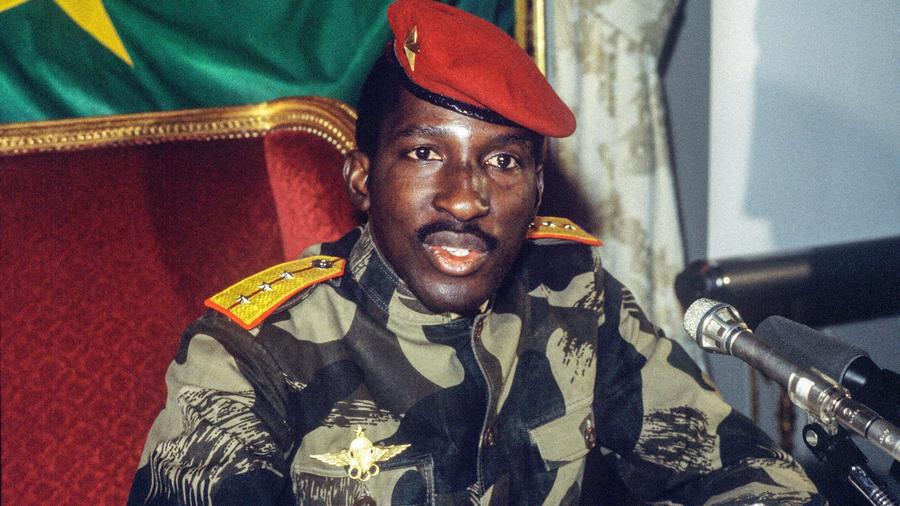
thomassankaara-greatman.jpg

Known for his hard work and his abhorrence of laziness and bureaucracy, Sankara was sleeping less than five hours a day, and often traveled to the remote villages—even past midnight—because he wanted to understand the real conditions of his people.

Sankara did not just ambition to send his country to the Moon. He had tons of other earth-shattering dreams that he never lived to see achieved. Here are a few examples I can cite right off the top of my head:

In the field of automobile and transport, Sankara wanted Burkina Faso to stop importing vehicles and start making its own. Yes, he ambitioned to design and produce a national car, a vehicle completely “made in Burkina.” But not only that. He planned to organize the country’s top artisans and technicians so that in the long run, Burkina Faso could manufacture its own buses, lorries, trucks, and tractors.

As far as agriculture was concerned, Sankara had an ambitious dream as well: he wanted to turn Burkina Faso into a global food superpower. As he said, “Our threefold objective consists in making Burkina Faso go from achieving food security to food self-sufficiency and eventually to becoming a global food superpower.” In less than four years, the first step – food security – was achieved in Burkina Faso.

Inspired by the great man-made river project in Libya, Sankara wanted—in collaboration with Ghana—to link Burkina Faso and Ghana via a canal passing through Akosombo, a small town in the Eastern Region of Ghana.

And the list could go on and on.

Unfortunately, with Sankara’s premature death, these dreams were also aborted. But you get the point: Sankara was a bold dreamer. But he was not just a bold dreamer.

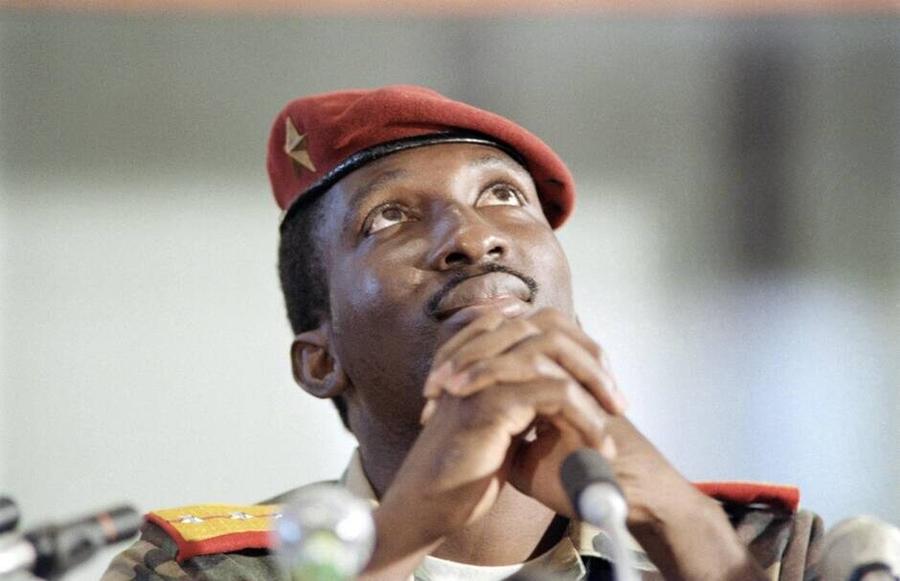
Just like Solomon in the Bible, Sankara’s dreams were other-centered dreams. He did not just dream big dreams, but he also made sure to put others first in his quest for greatness or success. He had always wanted to be a greater blessing to the world as a whole. And he had said it over and over again: “I want people to remember me as someone whose life has been helpful to humanity.”
thomas-sankara-pray.jpeg

Just like Solomon in the Bible, Sankara did not ask to go to the Moon just for the pleasure of sending someone on the moon. He dreamed of sending his country to the Moon not because he wanted fame for himself or for his own country. He was ready to send his country to the Moon if and only if this endeavor was going to be a contribution to humanity’s advancement as a whole: “...it will really be beneficial if all this scientific progress is put at the service of the peoples of the world.” Only after emphasizing the importance of making this scientific progress beneficial to humanity did Sankara go on to make his request: “You must provide two places to train two Burkinabè cosmonauts. We, too, want to go to the Moon!”

Needless to say, Sankara wanted to be a great man. And just like him, you too have the right to greatness. Whoever you are, you must seek greatness in the area of your selection. And whoever you are, you can easily become great. Why? Because greatness comes from your decision to serve others. And as Martin Luther King Jr., once put it, serving others is something that everybody can do on a daily basis:

“Everybody can be great, because everybody can serve. You don’t have to have a college degree to serve. You don’t have to make your subject and your verb agree to serve. You don’t have to know about Plato and Aristotle to serve. You don’t have to know Einstein’s theory of relativity to serve. You don’t have to know the second theory of thermodynamics in physics to serve. You only need a heart full of grace, a soul generated by love. And you can be that servant.”
greatmansankara-nonconformaty.png

Thomas Sankara’s life was driven by his desire to help others. More than anything, he wanted to create sustainable happiness for humanity. His efforts were geared toward wholeheartedly supporting the poorest of the poor in their struggle for a better, just, and more dignified life. For him, happiness and solidarity go hand in hand, because “selfish happiness contains within itself the bombshell of its own destruction.”

As the president of Burkina Faso between 1983 and 1987, Thomas Sankara refused the presidential salary (which he transferred to an orphanage) and actually lived on a monthly salary of 450 dollars. As president, he was earning less than most of his ministers and collaborators. But he never felt frustrated or insecure because of that. His office was known for its legendary simplicity, but he never felt inferior because of that.

Despite the terrible heat, Thomas Sankara refused to use the air-conditioning in his office, saying, “If most of our people cannot afford this, it’s a shame for me the President to start such a luxury! Until every ordinary person in this country has access to air conditioning, I won’t use one in my office. I’ll sweat. Just like everyone else.”

A lot of political leaders become suddenly rich as soon as they occupy a certain position. Not Thomas Sankara. When he died in October 1987, his most valuable possessions were a car, four bicycles (he loved sports), three guitars (he loved playing the guitar), a fridge with no smell of alcohol (he never drank alcohol or coffee), a broken freezer, and books (he was a voracious reader).

During his presidency, Thomas Sankara had received multi-million dollars’ worth of gifts (including cash and various car brands like BMW, Alfa Romeo, Toyota Cressida, Mitsubishi, etc.) from businessmen and other wealthy heads of state. Sankara deposited all these sums of money at the National Treasury. The vehicles were either transferred to the state automobile fleet or sold and the money used to build social infrastructures. His wife was also the beneficiary of a lot of donations which were all transferred to the Revolutionary Solidarity Fund and the Women’s restaurant.
thomassankaara.jpg

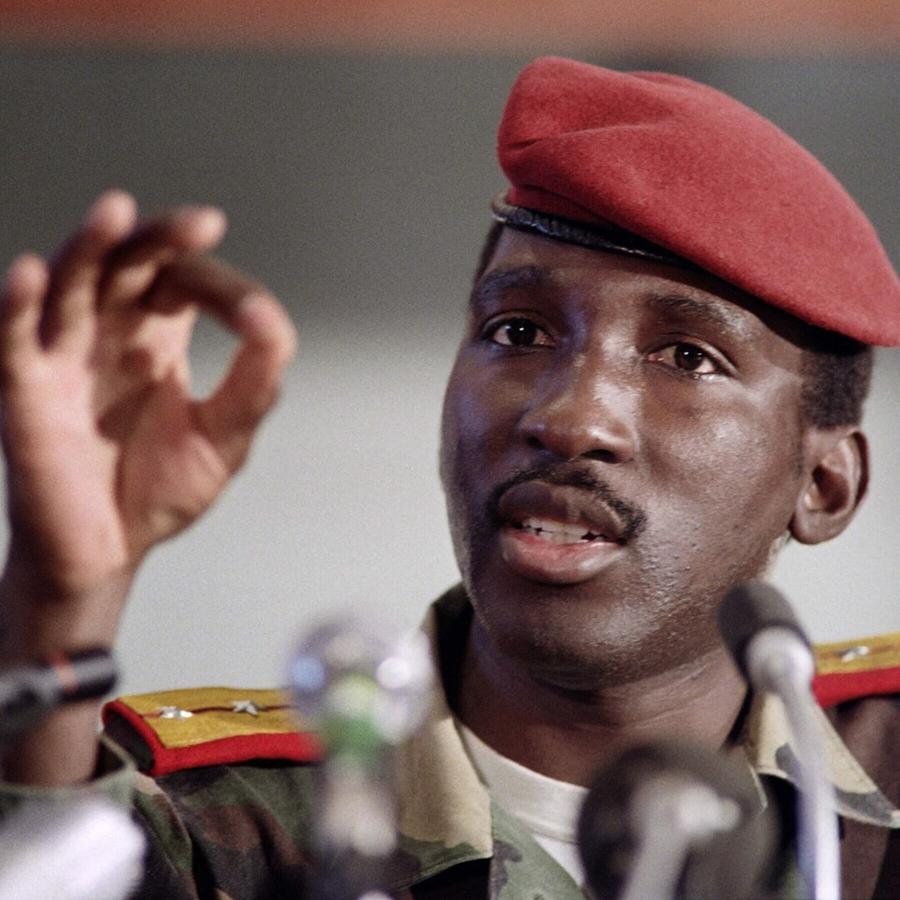
After his historic public declaration of assets—which he made in front of the People’s Commission for the Prevention of Corruption and a large audience on February 19, 1987—Thomas Sankara was labeled as Africa’s poorest president. But that’s not how he viewed himself. You see, Sankara had all the chances and opportunities to enrich himself, he just decided not to do it. He chose to live the austere and minimalistic life of a monk in the midst of a vast ocean of material wealth and opportunities. It wasn’t because he was allergic to luxury or material riches. He cared about the wellbeing of his people: “I am not against luxury. I am not against material wealth; but I want luxury and material wealth for everyone.”

The same philosophy applied to the Revolution he was leading at the time: “Our Revolution is not against what is beautiful. Our Revolution is not against what is luxury. Our Revolution is against beauty and luxury for a minority.”

As you can see, Thomas Sankara’s life was guided by the virtue of thinking of oneself less. That’s right! It’s the virtue of thinking of himself less that led Sankara to consider solidarity as both a right and an obligation toward our fellow humans: “While we are rejoicing and making merry, we must think of those who do not have the opportunity to do so… We have the right, we have the duty, to think of all Burkinabè. While? Because selfish happiness is only an illusion… We must understand and accept the need for solidarity beyond our immediate family, tribal group or village.”

It’s the virtue of thinking of himself less that explains why Sankara was very harsh with his ministers and collaborators, who thought the time had come for them to enjoy the privileges that come with being appointed as high official: “If we proclaim that we are here for all the people, then we should know that while we are living in towns with water and electricity at our disposal, other country mates are elsewhere without anything and, unfortunately, never knew they could even claim betterment. So we’ve got to be sincere and honest with ourselves… It is not normal that some of us have a guaranteed existence and even seek to enhance it while another fraction of the people, long marginalized, is still seeking its right to exist.”
thomas-sankara-1730759248.jpeg

It’s the virtue of thinking of himself less that led Thomas Sankara to make it for his literate compatriots an obligation to place their ability to read and write at the service of the great mass of illiterates: “Anyone who knows how to read will have the duty to teach a certain number of people, otherwise we will take away the opportunity for him to do it for himself.”

It’s the virtue of thinking of himself less that led Thomas Sankara to take into account not only the well-being of the current people, but also of the generations to come: “While it’s normal for man to use all means to live and survive, while it’s is normal for each of us to think about living happily, it is essential that we also take the time to ponder over the fate of future generations.”

It’s the virtue of thinking of himself less that helped Thomas Sankara understand, more than anyone, that “Man’s selfishness is the root cause of the misfortune of his neighbor.” He just couldn’t understand “why we lack money to drill drinking water wells at 100 meters when we have plenty of it to drill oil wells that are 3,000 meters deep!”
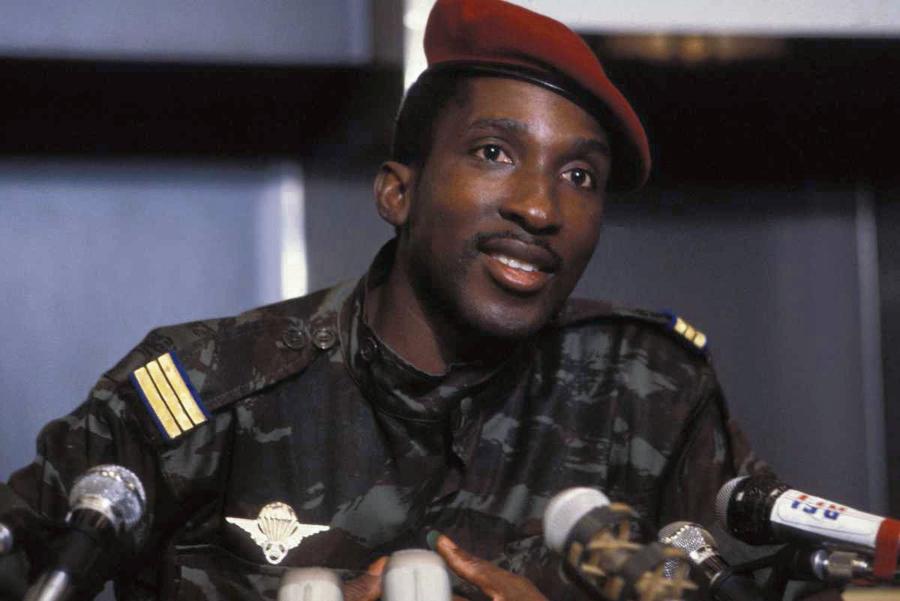
thomas-sankara-inspires-everyone.jpg

It’s the virtue of thinking of himself less that prompted Thomas Sankara to draw the world’s attention on February 5, 1986 to the urgency to align scientific progress with the need to save the environment and life itself: “We are not against progress, but we do not want progress to be anarchic and criminally oblivious of the rights of others… Let us not turn away from the suffering of others because desertification no longer has borders.”

It’s the virtue of thinking of himself less that explains why Thomas Sankara had no pity for corrupt citizens whom he regarded as the real enemies of the people. As he said, corruption has made more victims in Africa than any major disease you could think of: “We are judging a corrupt man so that we can restore the rights of millions of men. We are therefore fervent defenders of the rights of humans, not the rights of a man.”

It’s the virtue of thinking of himself less that inspired Thomas Sankara to position himself as the voice of the voiceless sufferers : “I speak not only on behalf of Burkina Faso, my country which I love so much, but also on behalf of all those who suffer, wherever they may be.”

It’s the virtue of thinking of himself less that led him to paraphrase José Marti in his speech at the United Nations on 4 October 1984: “We feel on our cheek every blow struck against every other man in the world.”
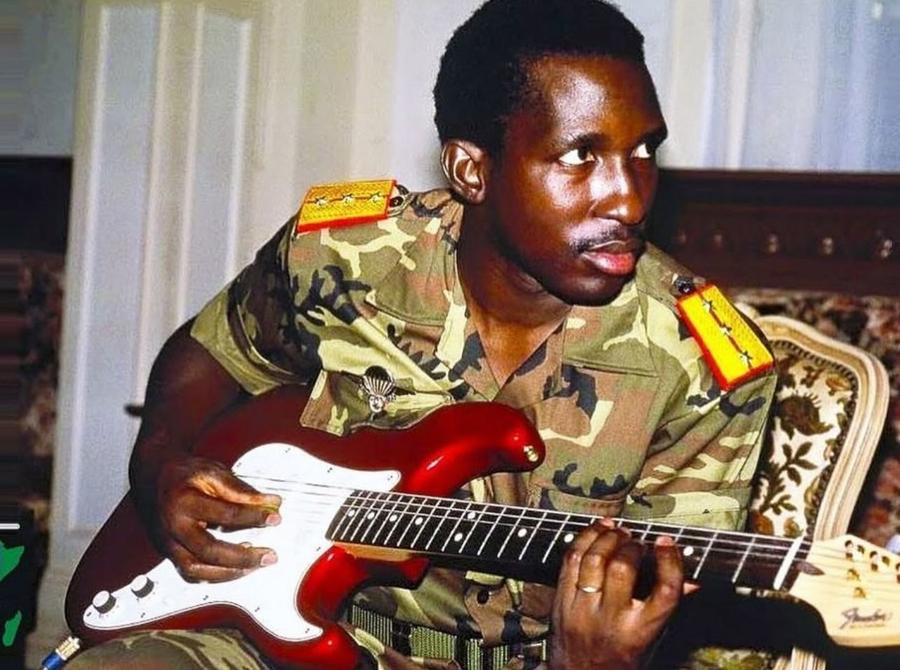
thomas-sankara-inspires-all-people.jpg

Yes, it’s the virtue of thinking of himself less that explains Thomas Sankara’s sympathy toward the marginalized of the society: “We must all change our mentality so as to accept the marginalized, namely the delinquents, the beggars, and the prostitutes. They did not choose their current fate. They are the victims of a system, they are the products of a selfish and unjust social organization… All these delinquents who hang around, all these beggars who are in the street, they are our brothers; they are our sisters. These are the ones we have rejected out of selfishness. And this selfishness, we are going to fight it in each of us… The beggars who are in the streets, at the edge of hotels and in the market attacking us physically and morally are the consequence of social disorganization, of social putrefaction. We must put an end to this injustice…Our Revolution, instead of individualism and selfishness, develops active solidarity and brotherhood among all members of the society. It is not normal that some of us have a guaranteed existence and even seek to enhance it while another fraction of the people, long marginalized, is still seeking a right to existence.”

So shall it be with you. Whatever your calling in life, dare to go higher. But not only that, make sure that your dream is backed by a strong desire and commitment to uplift your fellow human beings. Make sure that your dream is supported by a burning desire to make the world a better place. That’s something we’re all commanded to do.
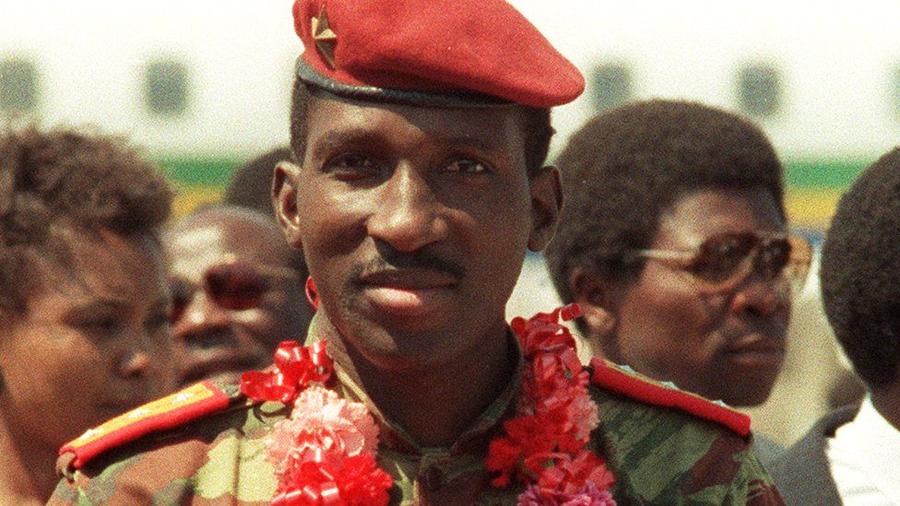
thomas-sankara-inspires-all.jpg

The Universe, as I said it before, is always ready to give a timely favorable response to any bold request we make, as long as what we ask for is connected with uplifting others and making this world a better place for all. Yes, God wants us to never think less of ourselves; yet He always encourages us to always think of ourselves less by thinking more of others.

Every time you rise in thought to greater ideals and to a loftier life purpose, every time you see yourself as capable of achieving anything you put your attention on, you are proving in fact that you are not thinking less of yourself. And every time you seek to elevate others while pursuing your ideals, you are showing that you think of yourself less. When you understand that logic, you’ll understand why dreaming big is not a luxury, but a necessity.

So quit belittling yourself! Wake up and shake off the idea that God has created you to occupy an inferior place in this world. Accept the fact that you have a right to the favors and blessings the King of the universe can bestow on any individual of the human race. Dare to dream big dreams. Not self-centered dreams, but ones that can also benefit other people as well.
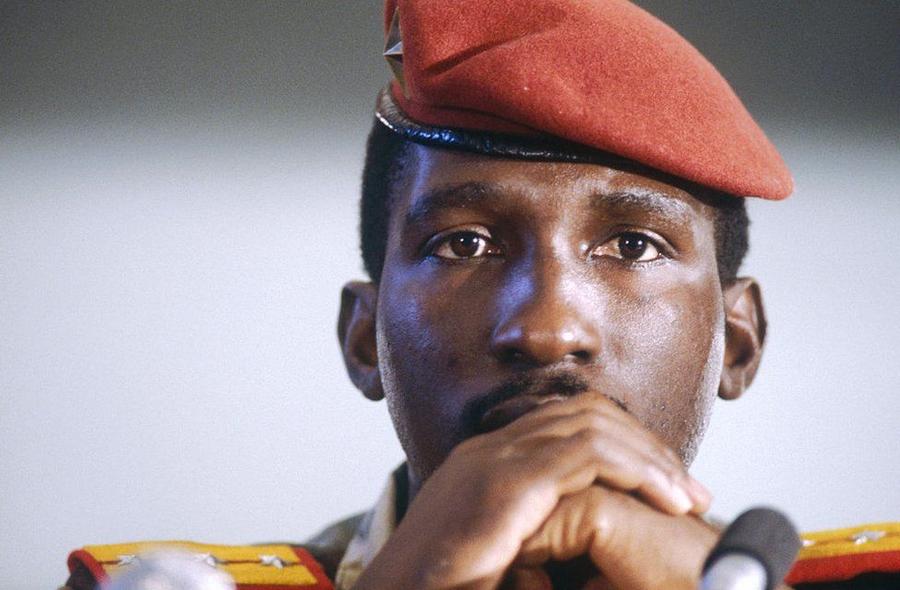
120999613-gettyimages-541785178-1.jpg

Stop nurturing puny goals and allow yourself the freedom to decide what is possible for you. I mean, let your imagination run wild. Throw all common sense to the wind, and start asking for abundant wealth and influence. You don’t have to think or dream small because you come from a poor background. You don’t have to go around with a poor mentality because you come from a poor country or community.

Whatever your education, background, country or nationality, you have the right to shine. Regardless of your limitations, have the boldness to ask the universe to make you so great, so excellent, and so influential in your field that you will remember a hundred years from now as someone whose life has been useful to humanity.

Whatever your field of endeavor, you must have the boldness to ask the universe to make you so great, so excellent, and so influential that no one can ignore you. Yes! Whatever your calling in life, whatever your field of endeavor, the Universe expects you to do what Edgar Allan Poe once wrote: “dreaming dreams that mortals never dared to dream before!” But it also expects you to put others first in your quest for greatness.

This, in fact, is where the secret of personal and corporate successes lies. Biographies of the world’s greatest industrialists and philanthropists are filled with evidence that dreaming big while connecting one’s dreams to helping others is the secret to enjoying a healthy and lasting success in the business world.

That’s right! There is no other road to business or entrepreneurial success than creating value for others. Success comes as a result of your ability to build and offer something unique that will contribute to people’s lives in a lasting way. In other words, finding workable solutions to real problems that members of the society are facing.
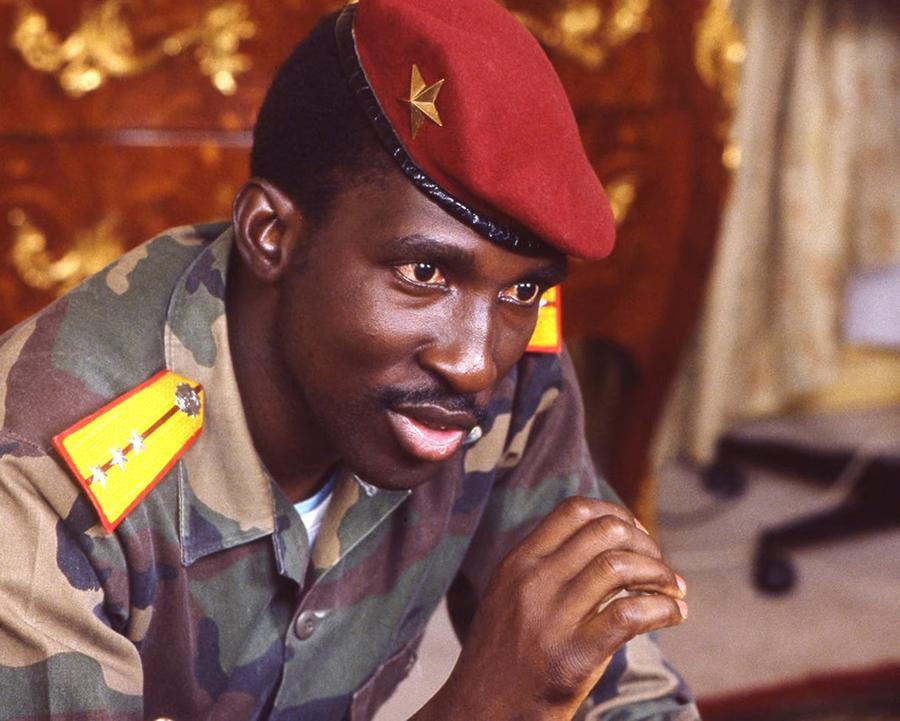
jad20210416-ass-burkina-assassinat-sankara.jpeg

Without that mindset, you will never amount to a successful person in your field no matter how many skills, diplomas or knowledge you have. Ignorance of this truth has led to the premature death of many businesses even though their owners were big dreamers. They paid the ultimate price for not putting themselves on the line for others. They caused their own demise by not truly contributing something of value to those around them.

Again, whoever you are, proclaim with all your might your desire to be great. Stand up and proclaim with Thomas Sankara: “Yes, we too, want to go to the Moon!” Not because of the glory. Not for the sake of being there, high above everybody else; but because you’re convinced that in doing so, there is something beneficial in it for humanity as a whole.

What am I saying? Don’t remain sitting down if you know you can walk. Don’t just walk if you know you can run. Don’t just run if you know you can fly. I mean, don’t ever settle for less when deep down you know that you deserve better. Coming from a poor family background is not an excuse for you to think or dream small. You are as valuable as anyone else, which means that you have the right to dream the biggest dream a human being can possibly dream.
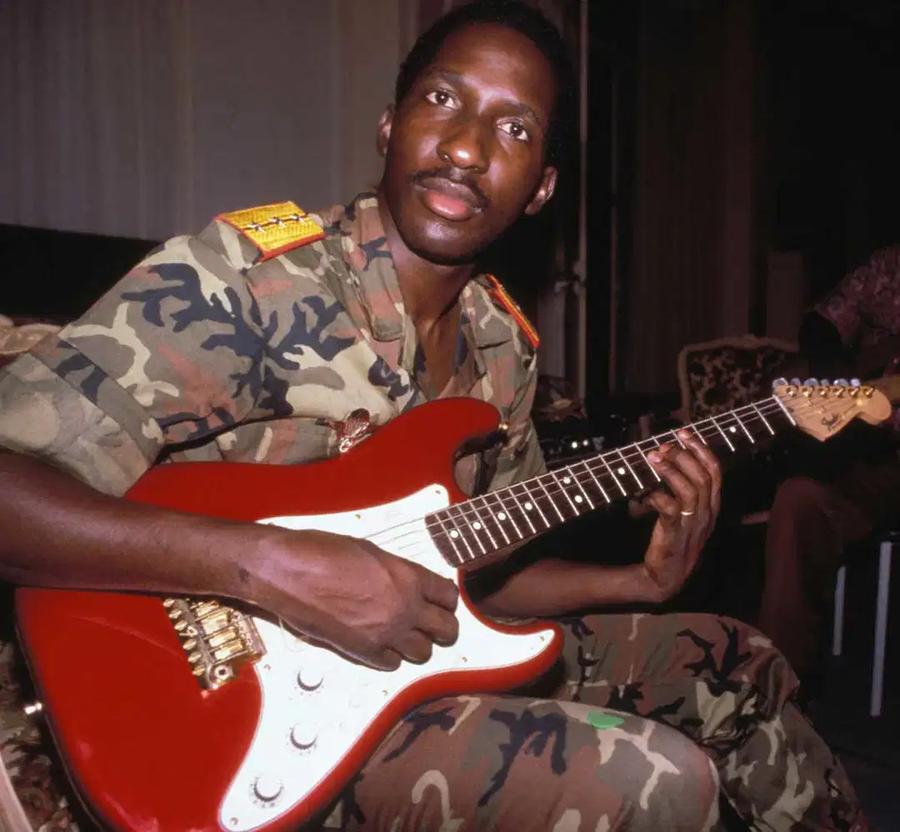
thomas-sankara-guitar.jpeg

That’s right. So go ahead and embrace a mission greater than yourself. Why? Because just like Thomas Sankara, you too, are commanded to be ambitious. You are commanded to aim for the seemingly impossible. And just like Sankara, you must make sure that your dreams are other-centered dreams. Yes, just like Sankara, you must have the burning desire to achieve big success in what you are doing. Not so you could accumulate fame and popularity for yourself. Not so that you could live a selfish flamboyant life, but because you want to live a legacy-driven life. In other words, your actions must be guided by your intention to make a difference in the world. Your dreams must be driven by your commitment to making a positive impact in as many people’s lives as possible.

True, you might not live to see all your dreams achieved during your lifetime. That’s right! Just like Thomas Sankara, you might not be able to finish the dream, but that’s okay. Life, as Martin Luther King Jr., said, is nothing but “a long, continual story of setting out to build a great temple and not being able to finish it.” But that’s not a reason for us not to dream big. You must commit yourself to a greater life purpose and do it so well that other people will be inspired to continue the work you’ve started.

God bless your soul Thomas Sankara and Thank You and Good Luck.
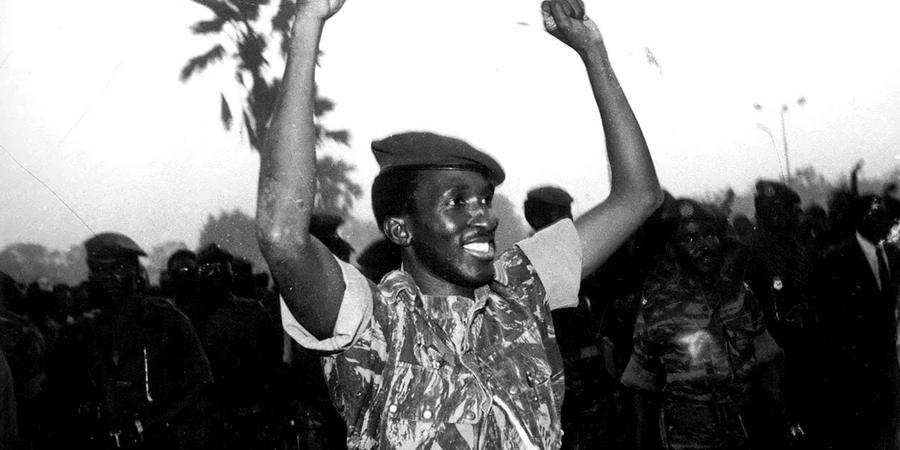
thomas-sankara-good-man.jpeg

by kingrobin 2026-06-05 14:32:41
⚭ 14 and back
🤍 1


🌍 time ❤️ heart ⚭ combo for day week month year all


So go ahead and embrace a mission greater than yourself. Why? Because just like Thomas Sankara, you too, are commanded to be ambitious. You are commanded to aim for the seemingly impossible. And just like Sankara, you must make sure that your dreams...

are other-centered dreams. Yes, just like Sankara, you must have the burning desire to achieve big success in what you are doing. Not so you could accumulate fame and popularity for yourself. Not so that you could live a selfish flamboyant life, but because you want to live a legacy-driven life. In other words, your actions must be guided by your intention to make a difference in the world. Your dreams must be driven by your commitment to making a positive impact in as many people’s lives as possible.

by kingrobin 2026-06-21 11:39:58
combo with thomas-sankara-the-voice
more or back
🤍 1


you might not live to see all your dreams achieved during your lifetime. That’s right! Just like Thomas Sankara, you might not be able to finish the dream, but that’s okay. Life, as Martin Luther King Jr., said, is nothing...

but “a long, continual story of setting out to build a great temple and not being able to finish it.” But that’s not a reason for us not to dream big. You must commit yourself to a greater life purpose and do it so well that other people will be inspired to continue the work you’ve started.

by kingrobin 2026-06-21 11:36:38
combo with thomas-sankara-the-voice
more or back
🤍 1


most def most important this combo post.

by kingrobin 2026-06-21 11:22:11
combo with thomas-sankara-the-voice
more or back
🤍 1


11

by kingrobin 2026-06-06 21:47:01
combo with thomas-sankara-the-voice
more or back
🤍


Aid is supposed to help development, but one can look in vain in what used to be Upper Volta to see any sign of any kind of development. The people who were in power through either naivety or class selfishness could not or else did not want...

..to gain control over this inflow from the outside or grasp the scope of it and use it in the interests of our people. -Thomas Sankara

by kingrobin 2026-06-06 17:23:54
⚭ 1 combo with thomas-sankara-the-voice
more or back
🤍 1


Stop nurturing puny goals and allow yourself the freedom to decide what is possible for you. I mean, let your imagination run wild. Throw all common sense to the wind, and start asking for abundant wealth and influence. -Thomas Sankara

by kingrobin 2026-06-06 14:57:15
combo with thomas-sankara-the-voice
more or back
🤍


science has been taken over by the gun merchants. My thoughts go to all those who nave been affected by the destruction of nature, those 30 million who are dying every year, crushed by that most fearsome weapon, hunger. -Thomas Sankara

by kingrobin 2026-06-06 14:54:16
combo with thomas-sankara-the-voice
more or back
🤍


We are judging a corrupt man so that we can restore the rights of millions of men. We are therefore fervent defenders of the rights of humans, not the rights of a man. -Thomas Sankara

by kingrobin 2026-06-05 15:36:50
combo with thomas-sankara-the-voice
more or back
🤍 1


Our Revolution is not against what is beautiful. Our Revolution is not against what is luxury. Our Revolution is against beauty and luxury for a minority. -Thomas Sankara

by kingrobin 2026-06-05 15:04:37
combo with thomas-sankara-the-voice
more or back
🤍 1


by kingrobin 2026-06-05 14:36:34
combo with thomas-sankara-the-voice
more or back
🤍 1


Speech before the General Assembly of the United Nations

I bring the fraternal greetings of a country covering 274,000 square kilometres, where 7 million men, women and children refuse henceforth to die of ignorance, hunger and thirst, even though they are not yet able to have a real life, after a quarter of a century as a sovereign State represented here at the United Nations.

I come to this thirty-ninth session of the General Assembly to speak on behalf of a people which, on the land of its ancestors, has chosen from now on to assert itself and to take responsibility for its own history, in both its positive and negative aspects, without any complexes.

I come here, mandated by the National Council of the Revolution of Burkina Faso, to express the views of my people on the problems that have been included on the General Assembly's agenda, which form the tragic background of the events which are sadly undermining the foundations of the world late in this twentieth century. It is a world of chaos, in which the human race is tom apart by struggles between the great and the not-so-great, attacked by armed bands and subjected to violence and plunder. It is a world in which the nations, eluding international jurisdiction, command groups beyond the law, which, with gun in hand, live by preying on others and organizing the most despicable kinds of trafficking.

I do not intend to enunciate dogmas here. I am neither a messiah nor a prophet. I possess no truths. My only ambition is a twofold aspiration: first, to be able to speak in simple language, the language of facts and clarity, on behalf of my people, the people of Burkina Faso, and, secondly, to be able-to express in my own way the feelings or that mass of people who are disinherited--those who belong to that world maliciously dubbed "the third world"--and to state, even if I cannot make them understood, the reasons that have led us to rise up, all of which explains our interest in the United Nations, the demands of our rights drawing strength in the clear awareness of our duties.

Nobody will be surprised to hear us associate the former Upper Volta, now Burkina Faso, with that despised rag-bag, the third world, which the other worlds invented at the time of our independence in order better to ensure our intellectual, cultural, economic and political alienation. We want to fit in there without at all justifying this great swindle of history, still less accepting that we are a backward world left behind by the West. Rather, we do so to affirm our awareness of belonging to a three-continent whole and to state, as one of the non-aligned countries, our deeply felt conviction that a special solidarity unites the three continents of Asia, Latin America and Africa in the same battle against the same political traffickers and economic exploiters.

Thus to recognize our presence in the third world is, to paraphrase JosĂŠ Marti, to affirm that we feel on our cheek every blow struck against every other man in the world. So far, we have turned the other cheek. The slaps in the face have been redoubled and the evil-doers have felt no tenderness in their hearts. They have trampled on the truth of the just. They have betrayed the word of Christ. They have turned His cross into a club, and after putting on His robe they have tom our bodies and souls to shreds. They have obscured His message, making it a Western one, whereas we saw it as a message of universal liberation. Now our eyes have been opened to the class struggle and there will be no more blows dealt against us. It must be proclaimed that there will be no salvation for our peoples unless we turn our backs completely on all the models that all the charlatans of that type have tried to sell us for 20 years. There can be no salvation for us unless we reject those models; there can be no development without that break.

Now all the new "master minds" are awakening, roused by the dizzy increase of millions of men in rags and frightened by the threat to their digestion of this multitude hounded by hunger. They are beginning to change their tune and are again anxiously seeking among us miraculous ideas for new forms of development for our countries. In order to understand this it is necessary only to read the proceedings of innumerable colloquys and seminars.

I certainly do not wish to ridicule the patient effort of those honest intellectuals who, because they have t, ;s to see, have observed the terrible consequences of the ravages caused in the third world by the so-called development specialists.

I fear that the results of all the energies seized by the PrĂłsperos of all kinds may be turned into a magic wand to be used to turn us back in to a world of slavery, dressed up according to the taste of our times. This fear is justified by the fact that the African petite bourgeoisie with its diplomas, if not that of the whole third world, is not ready--whether because of intellectual laziness or simply because it has sampled the Western way of life--to give up its privileges. It therefore forgets that all true political struggle requires a rigorous theoretical debate, and it refuses to do the thinking necessary in order to invent the new concepts needed to wage the kind of struggle to the death that is ahead of us. A passive and pathetic consumer group, it overflows with the "in" words of the West, just as it overflows with its whisky and champagne, in salons where there is a dubious kind of harmony. One will search in vain-- the concepts of Blackness or the African personality now being a little outdated--for truly new ideas from the brains of our so-called intellectual giants. Words and ideas come to us from elsewhere. Our professors, engineers and economists are content simply to add a little colouring, because they have brought from the European universities of which they are the products only their diplomas and the surface smoothness of adjectives and superlatives. It is urgently necessary that our qualified personnel and those who work with ideas learn that there is no innocent writing. In these tempestuous times, we cannot leave it to our enemies of the past and of the present to think and to imagine and to create. We also must do so.

Before it is too late--and it is already late--this ĂŠlite, these men of Africa, of the third world, must come to their senses; in other words, they must turn to their own societies, they must look at this wretchedness that we have inherited, to understand that the battle for thought that will help the disinherited masses not only is not a vain one but can become credible at the international level. They must provide a faithful picture for their own peoples, a picture that will enable them to carry out profound changes in the social and political situation so that we can free ourselves from the foreign domination and exploitation that can lead our States only to failure.

This is something that we understood, we, the people of Burkina Faso, on that night of 4 August 1983, when the stars first began to shine in the heavens of our homeland. We had to take the lead of the peasant uprisings in the countryside, threatened by desertification, exhausted by hunger and thirst, and abandoned. We had to give some sense of meaning to the revolts of the unemployed urban masses, frustrated and tired of seeing the limousines of the alienated ĂŠlite flash by following the head of State, who offered them only false solutions devised and conceived in the brains of others. We had to give an ideological soul to the just struggles of our masses mobilized against the monstrosity of imperialism. Instead of a minor, short-lived revolt, we had to have revolution, the eternal struggle against all domination. Others have noted this before me and yet others will say after me how broad the gap now is between the rich peoples and those that aspire only to have enough to eat, enough to drink, to survive and to defend their dignity, but nobody could believe how much of the food of our people has gone to feed the rich man's cow.

In the case of Upper Volta, the process was even more crystal clear. We demonstrated the essence of all the calamities that have crushed the so-called developing countries.

The truth about aid, represented as the panacea for all ills and often praised beyond all rhyme or reason, has been revealed. Very few countries have been so inundated with aid of all kinds as has mine.

Aid is supposed to help development, but one can look in vain in what used to be Upper Volta to see any sign of any kind of development. The people who were m power through either naivety or class selfishness could not or else did not want to gain control over this inflow from the outside or grasp the scope of it and use it in the interests of our people.

Analysing a table that was published in 1983 by the Sahel Club, Jacques Giri, in his book entitled The Sahel Tomorrow, concluded quite sensibly that aid to the Sahel, because of its content and because of the machinery in place, was only aid for survival. He emphasized that only 30 per cent of that aid would enable the Sahel simply to remain alive. According to Jacques Giri, this outside aid was designed only for the continued development of the unproductive sectors, imposing intolerable burdens on our small budgets, completely disrupting our countryside, creating deficits in our trade balance and, in fact, speeding up our indebtedness.

Here are just a few standard facts to describe what Upper Volta used to be like: 7 million inhabitants, with more than 6 million peasants; infant mortality at 180 per 1,000; life expectancy of 40 years; an illiteracy rate of 98 per cent, if literacy is considered to mean being able to read, write and speak a language; one doctor for 50,000 inhabitants; 16 per cent receiving schooling; and lastly, a gross domestic product of 53,356 CFA francs, that is, just over $100 per capita.

The diagnosis obviously was a very bad one. The source of the evil was political and so the only cure must be a political one.

Of course, we encourage aid that can help us to manage without aid, but in general the aid and assistance policies merely led us to become completely disorganized, to enslave ourselves, to shirk our responsibility in our economic, political and cultural areas..

We have chosen a different path to achieve better results. We have chosen to establish new techniques. We have chosen to seek forms of organization that are better adapted to our civilization, abruptly and once and for all rejecting all kinds of outside diktats, so that we can create the conditions for a dignity in keeping with our ambitions.

We refuse simple survival. We want to ease the pressures, to free our countryside from medieval stagnation or regression. We want to democratize our society, to open up our minds to a universe of collective responsibility, so that we may be bold enough to invent the future. We want to change the administration and reconstruct it with a different kind of civil servant. We want to get our army involved with the people in productive work and remind it constantly that, without patriotic training, a soldier is only a criminal with power. That is our political programme.

At the economic level, we are learning to live simply, to accept and to demand of ourselves the austerity that we need in order to carry out our great designs.

Thanks to the revolutionary solidarity fund, which is fed by voluntary contributions, we are now beginning to deal with the cruel questions posed by the drought. We support and have applied the principles of the Declaration of Alma-Ata/ expanding our primary health care. We endorse as a State policy the global strategy of GOBI FFF advocated by UNICEF.

We believe that through the United Nations Sudano-Sahelian Office, the United Nations should enable those countries affected by drought to establish a medium- and long-term plan to achieve selfsufficiency in food.

To prepare for the twenty-first century, we have begun, by creating a special tombola section, an immense campaign for the education and training of our children in a new school. The programme is called "Let's teach our children". Through committees to defend the revolution, we have established a vast house-building programme--500 units in three months--and we are also building roads, small water collectors, and so forth. Our economic ambition is to work to ensure that the use of the mind and the strength of each inhabitant of Burkina Faso will produce what is necessary to provide two meals a day and drinking-water.

We swear that in future in Burkina Faso nothing will be done without the participation of the people of Burkina Faso themselves, nothing that has not been decided by us, that has not been prepared by us. There shall be no more attacks on our honour and dignity.

Strengthened by this conviction, we want our words to cover all those who suffer, all those whose dignity has been crushed by a minority or a system.

Let me say to those who are listening to me now that I speak not only on behalf of Burkina Faso, my country which I love so much, but also on behalf of all those who suffer, wherever they may be.

I speak on behalf of those millions of human beings who are in ghettos because their skin is black, or because they have a different kind of culture, those whose status is hardly higher than that of an animal.

I suffer, too, on behalf of those Indians who have been massacred, trampled on and humiliated and who, for centuries, have been confined to reservations, so that they do not have any aspirations to any rights whatsoever, so that their culture cannot become enriched through contact with other cultures, including that of the invader.

I speak out on behalf of those who are unemployed because of a structurally unjust system which has now been completely disrupted, the unemployed who have been reduced to seeing their lives as only the reflection of the lives of those who have more than themselves.

I speak on behalf of women throughout the entire world who suffer from a system of exploitation imposed on them by men. As far as we are concerned, we are willing to welcome all suggestions from anywhere in the world that will help us to promote the full development and prosperity of the women of Burkina Faso. In return, we will share with all countries the positive experience we are now undertaking with our women, who are now involved at all levels of the State apparatus and social life in Burkina Faso, women who struggle and who say with us that the slave who will not shoulder responsibility to rebel does not deserve pity. That slave will alone be responsible for his own wretchedness if he has any illusions whatsoever about the suspect indulgence shown by a master who pretends to give him freedom. Only struggle helps us to become free, and we call on all our sisters of all races to rise up to regain their rights.

I speak on behalf of the mothers of our poor countries who see their children dying of malaria and diarrhoea, unaware that to save them there are simple methods available but which the science of the multinationals does not offer to them, preferring to invest in cosmetics laboratories and engage in cosmetic surgery to satisfy the whims and caprices of a few men and women who feel they have become too fat because of too many calories in the rich food they consume with regularity. That must make even members of this Assembly dizzy--not to mention the peoples of the Sahel. We have decided to adopt and popularize the methods that have been advocated by WHO and UNICEF.

I speak on behalf of the child, the child of the poor man, who is hungry and who furtively eyes the wealth piled up in the rich man's shop, a shop that is protected by a thick window, a window which is defended by an impassable grille, the grille guarded by a policeman in a helmet with gloves and a bludgeon, the policeman placed there by the father of another child, who comes there to serve himself or rather to be served because these are the guarantees of capitalistic representativeness and norms of the system.

I speak on behalf of the artists--poets, painters, sculptors, musicians, actors and so on--people of good will who see their art being prostituted by the show-business magicians.

I cry out on behalf of the journalists who have been reduced to silence or else to lies simply to avoid the hardships of unemployment.

I protest on behalf of the athletes of the entire world whose muscles are being exploited by political systems or by those who deal in the modern slavery of the stadium.

My country is the essence of all the miseries of peoples, a tragic synthesis of all the suffering of mankind but also, and above all, the synthesis of the hopes of our struggles. That is why I speak out on behalf of the sick who are anxiously looking to see what science can do for them--but that science has been taken over by the gun merchants. My thoughts go to all those who nave been affected by the destruction of nature, those 30 million who are dying every year, crushed by that most fearsome weapon, hunger.

As a soldier, I cannot forget that obedient soldier who does what he is told, whose finger is on the trigger and who knows that the bullet which is going to leave his gun will bring only a message of death.

Lastly, I speak out in indignation as I think of the Palestinians, whom this most inhuman humanity has replaced with another people, a people who only yesterday were themselves being martyred at leisure. I think of the valiant Palestinian people, the families which have been splintered and split up and are wandering throughout the world seeking asylum. Courageous, determined, stoic and tireless, the Palestinians remind us all of the need and moral obligation to respect the rights of a people. Along with their Jewish brothers, they are anti-Zionists.

Standing alongside my soldier brothers of Iran and Iraq, who are dying in a fratricidal and suicidal war, I wish also to feel close to my comrades of Nicaragua, whose ports are being mined, whose towns are being bombed and who, despite all, face up with courage and lucidity to their fate. I suffer with all those in Latin America who are suffering from imperialist domination.

I wish to stand side by side with the peoples of Afghanistan and Ireland, the peoples of Grenada and East Timor, each of those peoples seeking happiness in keeping with their dignity and the laws of their own culture.

I rise up on behalf of all who seek in vain any forum in the world to make their voices heard and to have themselves taken seriously.

Many have already spoken from this rostrum. Many will speak after me. But only a few will take the real decisions, although we are all officially considered equals. I speak on behalf of all those who seek in vain for a forum in the world where they can be heard. Yes, I wish to speak for all those--the forgotten--because I am a man and nothing that is human is alien to me.

Our revolution in Burkina Faso takes account of the ills of all peoples. We are also inspired by all the experiences of mankind, from the very first breath of the first human being.

We wish to enjoy the inheritance of all the revolutions of the world, all the liberation struggles of the third-world peoples. We are trying to learn from the great upheavals that have transformed the world. We have drawn the lessons of the American revolution, the lessons of its victory against colonial domination, and the consequences of that victory. We endorse the doctrine of non-interference by Europeans in American affairs and non-interference by Americans in European affairs. In 1823, Monroe said "America for the Americans". We would say "Africa for the Africans; Burkina Faso for the Burkinabe". The French revolution of 1789, which disrupted the foundations of absolutism, has taught us the rights of man linked to the rights of peoples to freedom. The great revolution of October 1917 transformed the world and made possible the victory of the proletariat, shook the foundations of capitalism and made possible the dreams of justice of the French Commune.

Open to all the wishes of the peoples and their revolutions, learning also from the terrible failures that have led to truly sad infringements of human rights, we want to preserve from each revolution only that essence of purity that prohibits us from becoming servants to the realities of others, even though in our thinking we find that there is a community of interests among us.

There must be no more deceit. The new international economic order, for which we are struggling and will continue to struggle, can be achieved only if we manage to do away with the old order, which completely ignores us, only if we insist on the place which is ours in the political organization of the world, only if we realize our importance in the world and obtain the right to decision-making with respect to the machinery governing trade, economic and monetary affairs at the world level.

The new international economic order is simply one among all the other rights of peoples--the right to independence, to the free choice of the form and structure of government, the right to development-- and like all the rights of peoples it is a right which can be gained only through the struggle of the peoples. It will never be obtained by any act of generosity by any Power whatsoever.

I continue to have unshakeable confidence--a confidence I share with the immense community of non-aligned countries--that, despite our peoples' battering-ram cries of distress, our group will preserve its cohesion, strengthen its power of collective negotiation, find allies among all nations, and begin, together with all who can still hear us, to organize a really new system of international economic relations.

I agreed to come to speak before the Assembly because, despite the criticism of certain major contributors, the United Nations remains the ideal forum for our demands, the place where the legitimacy of countries which have no voice is recognized. This was expressed very accurately by the Secretary- General, when he wrote:

"The United Nations reflects in a unique way the aspirations and frustrations of many nations and groups all over the world. One of its great merits is that all nations---including the weak, the oppressed and the victims of injustice"--that is, us--"can get a hearing and have a platform even in the face of the hard realities of power. A just cause, however frustrated or disregarded, can find a voice in the United Nations. This is not always a well- liked attribute of the Organization, but it is an essential one."

The meaning and scope of the Organization could not be better defined.

Therefore, it is absolutely essential for the good of each of us that the United Nations be strengthened and provided with the means to take action. That is why we endorse the Secretary-General's proposals to this end, to help the Organization break the many deadlocks which have been carefully preserved by the great Powers in order to discredit it in the eyes of the world.

Since I recognize the admittedly limited merits of the Organization, I cannot but rejoice to see new Members join us That is why the delegation of Burkina Faso welcomes the admission of the 159th Member of the United Nations, the State of Brunei Darussalam.

The folly of those who, by a quirk of fate, rule the world makes it imperative for the Movement of Non-Aligned Countries--which, I hope, the State of Brunei Darussalam will soon join--to consider as one of the permanent goals of its struggle the achievement of disarmament, which is an essential aspect of the principal conditions of our right to development.

In our view, there must be serious studies of all the factors which have led to the calamities which have befallen the world. In this connection, President Fidel Castro stated our view admirably at the opening of the Sixth Conference of Heads of State or Government of Non-Aligned Countries, held at Havana in September 1979, when he said:

"Three hundred billion dollars could build 600,000 schools, with a capacity for 400 million children; or 60 million comfortable homes, for 300 million people; or 30,000 hospitals, with 18 million beds; or 20,000 factories, with jobs for more than 20 million workers; or an irrigation system for 150 million hectares of land--that, with the application of technology, could feed a billion people."

If we multiply those numbers by 10--and I am sure that that is a conservative figure--we can see how much mankind wastes every year in the military field, that is, against peace.

It is easy to see why the indignation of the peoples is easily transformed into rebellion and revolution in the face of the crumbs tossed to them in the ignominious form of some aid, to which utterly humiliating conditions are sometimes attached. It can be understood why, in the fight for development, we consider ourselves to be tireless combatants for peace.

We swear to struggle to ease tension, to introduce the principles of civilized life into international relations and to extend these to all parts of the world. That means that we can no longer stand by passively and watch people haggle over concepts.

We reiterate our determination to work actively for peace; to take our place in the struggle for disarmament; to take action in the field of international politics as a decisive factor, free of all hindrance by any of the big Powers, whatever may be their designs.

But the quest for peace also involves the strict application of the right of countries to independence. On this point, the most pathetic--indeed, the most appalling--example is found in the Middle East, where, with arrogance, insolence and incredible stubbornness, a small country, Israel, has for more than 20 years, with the unspeakable complicity of its powerful protector, the United States, continued to defy the international community.

Only yesterday, Jews were consigned to the horrors of the crematorium, but Israel scorns history by inflicting on others the tortures it suffered.

In any event, Israel--whose people we love for its courage and sacrifices of the past--should realize that the conditions for its own tranquillity are not to be found in military strength financed from outside. Israel must begin to learn to be a nation like other nations, one among many.

For the present, we declare from this rostrum our militant, active solidarity with the fighters, both men and women, of the wonderful people of Palestine, for we know that there is no suffering that has no end.

Analysing the economic and political situation in Africa, we cannot fail to stress our serious concern at the dangerous challenges to the rights of peoples hurled by certain nations which, secure in their alliances, openly flout international morality.

We are naturally pleased at the decision to withdraw foreign troops from Chad so that the Chadian people themselves, without intermediaries, can find the way to put an end to that fratricidal war and finally be able to dry the tears that have been shed for so many years. But, despite the progress made here and there in the struggle of the African peoples for economic emancipation, our continent continues to reflect the essential reality of the contradictions between the big Powers and to be oppressed by the unbearable scourges of today's world.

That is why we cannot accept and must unreservedly condemn the treatment of the people of Western Sahara by the Kingdom of Morocco, which has been using delaying tactics to postpone the day of reckoning that will in any event be forced upon it by the will of the Saharan people. I have visited the regions liberated by the Saharan people, and I have

come to believe more firmly than ever that nothing will stop its progress towards the total liberation of its country under the militant and enlightened leadership of the Frente POLISARIO.

I do not wish to dwell too long on the question of Mayotte and the islands of the Malagasy archipelago; since the facts are clear and the principles obvious, there is no need to dwell on them. Mayotte belongs to the Comoros; the islands of the archipelago belong to Madagascar.

With regard to Latin America, we welcome the initiative of the Contadora Group as a positive step in the search for a just solution to the explosive situation in the region. Commander Daniel Ortega, speaking here [16th meeting] on behalf of the revolutionary people of Nicaragua, made concrete proposals and posed some basic, direct questions. We hope to see peace in his country and throughout Central America on and after 15 October; this is what world public opinion calls for.

Just as we condemned the foreign aggression against the island of Grenada, so we condemn all foreign intervention. Thus, we cannot remain silent about the foreign military intervention in Afghanistan.

And yet there is one point that is so serious that each of us must give a very open and clear explanation of it. That question, as members can imagine, is that of South Africa. The unbelievable insolence of that country with respect to all nations of the world--even those that support the terrorism which it has erected into a State system designed physically to liquidate the black majority of that country--and the contempt that it has shown for all our resolutions constitute one of the most serious and overwhelming concerns of the world today.

But the most tragic factor is not that South Africa has outlawed itself from the international community because of its apartheid laws, not even that it continues to occupy Namibia illegally and keep it under its colonialist and racist boot or that it continues with impugnity to subject its neighbours to the laws of banditry. No, what is the most abject and the most humiliating for the human conscience is that it has made this tragedy a matter of everyday reality for millions of human beings, who have only their own body and the heroism or their bare hands to defend themselves. Sure of the complicity of the big Powers and the active support of certain among them, as well as of the criminal collaboration of some pathetic African leaders, the white minority simply ignores the feelings of all those people, everywhere in the world, who find the savage methods of that country to be absolutely intolerable.

There was a time when international brigades went to defend the honour of nations that suffered aggression. Today, despite the agonizing open wounds that are suffered, all we do is vote for resolutions that do nothing more than call on a nation of pirates, which "destroys a smile as hail kills flowers", to mend its ways.

We shall soon be celebrating the one-hundred- and-fiftieth anniversary of the emancipation of slaves in the British Empire. My delegation supports the proposal of Antigua and Barbuda for the commemoration of that event, which is of very great importance to African countries and the black world. For us, all that can be said throughout the world during the commemorative ceremonies must emphasize the terrible cost paid by Africa and the black world in the development of civilization. Nothing was given us in return, which no doubt explains the tragedy on our continent today. It is our blood that nourished the rise of capitalism, that made possible our present condition of dependence and consolidated our underdevelopment. But we cannot hide the truth any more; it cannot be ignored. The figures cannot be simply haggled away. For every black man who came to the plantations, five died or were crippled. And here I do not mention the disorganization of the continent and its consequences.

While the entire world, thanks to you, Mr. President, with the help of the Secretary-General, will be commemorating that anniversary and noting this truth, it will understand why we long for peace among nations and why we demand our right to development with absolute equality through the organization and distribution of human resources. It is because we belong to one of the races that has suffered the most that we in Burkina Faso have sworn that we shall never accept any splitting up of our country or any denial of justice. It is the memory of that suffering that causes us to stand side by side with the Palestine Liberation Organization [PLO] against the armed bands of Israel. It is the memory of that suffering which, on the one hand, causes us to support the African National Congress of South Africa [ANC] and the South West Africa People's Organization [SWAPO] and, on the other, makes absolutely intolerable the presence in South Africa of men who say they are white and feel entitled on that account to set the whole world on fire. It is that memory of suffering that makes us put all our faith in the United Nations, with the common responsibility, the common task and the common hopes of us all.

We demand that throughout the world the campaign to free Nelson Mandela be intensified so that his presence here at the next session of the General Assembly will be a victory of collective pride. In memory of our suffering and as a collective pardon, an international humanitarian prize should be given for all those who have contributed to the defence of human rights through their work and research. We call for cutting all budgets for space research by one ten-thousandth and devoting that amount to research in the field of health and to improving the human environment which has been disrupted by those "fireworks" which are harmful to the ecosystem.

We also propose that the structures of the United Nations be reviewed and revised so that an end may be put to the scandal of the right of veto. The perverse effects of its abuse have, of course, been offset by the vigilance of some States that possess the veto right. However, nothing can justify that right--neither the size of the country nor its wealth.

If the argument used to justify that inequity has been the cost paid during the Second World War, then those nations that have arrogated those rights to themselves should know that each of us has an uncle or a father who--like thousands of other innocent people recruited from the third world to defend the rights that had been flouted by the Hitlerite hordes-- also suffered and died from Nazi bullets. Therefore, let those major Powers, which miss no opportunity to question the right of peoples, not be so arrogant. The absence of Africa from the club of those that have the right of veto is an injustice which must be ended.

Lastly, my delegation would be failing in its duty if it did not call for the suspension of Israel and the pure and simple exclusion of South Africa from the United Nations. When, in the course of time, those countries have done what they must do to justify their presence in the international community, then we would be only too happy to welcome them here and to guide their first steps.

We should like to reconfirm our confidence in the United Nations. We are grateful for the work which its agencies have done in Burkina Faso and for their presence side by side with us in the difficult times in which we are living. We are grateful to the members of the Security Council for having allowed us twice this year to preside over the work of the Council. We only hope the Council will recognize the principle of the struggle against the extermination of 30 million human beings each year through hunger, which today is more devastating than nuclear weapons.

Our confidence and faith in the United Nations leads me to thank the Secretary-General for his visit, which we greatly appreciated; he came to see for himself the harsh reality of our life and to get a true picture of the aridity or the Sahel and the tragedy of desertification.

I cannot conclude without paying a tribute to the President of the General Assembly, who, with his great intelligence and perception, will guide the work of this thirty-ninth session.

I have travelled many thousands of kilometres to be here. I have come to ask each member to work together to put an end to the contempt of those who are unreasonable, to eliminate the tragic spectacle of children dying of hunger, to do away with ignorance, to ensure the triumph of the legitimate rebellion of peoples and to put an end to the use of weapons so that they can be laid down and fall silent, and to ensure that mankind will survive and that together, with the great poet Novalis we can all sing together:

"Soon the stars will come back to the Earth where they have long been gone; soon the sun will return, the star will shine again among the stars, all the races of the world will gather together again after a long separation, the old orphaned families will find one another again and every day there will be new discoveries, more people will embrace one another; then the inhabitants of the old days will come back to the Earth, the ashes will be relit in each tomb, the flame of life will bum again, the old houses will be rebuilt, the old times will come again and history will be the dream of the present extended to infinity."

Down with international reaction! Down with imperialism! Down with neo-colonialism! Down with "puppetism"!

Eternal glory to the peoples who are struggling for their freedom! Eternal glory to the peoples who stand shoulder to shoulder to defend their dignity! Eternal victory to the peoples of Africa, Latin America and Asia in their struggle!

Fatherland or death: we shall triumph.

by kingrobin 2026-06-05 14:35:18
combo with thomas-sankara-the-voice
more or back
🤍 1


Thomas Sankara – Hold Fast to Your Crown

I’ve said this before, and I’m going to repeat it here again: Whoever you are, you are far more royal than all the royals the earth has ever borne. Why? Because you are not a descendant of an earthly king. You are a descendant of a heavenly king, the King of kings. All you need to convince yourself is to dig into what the Bible proclaims over you: “The Lord will hold you in his hand for all to see — a splendid crown in the hand of God.”

Did you hear that? You’re a splendid crown! That means there is royal blood running through your veins. In fact from the moment you were born, from the moment the Creator of the universe has breathed life into you, the angels of heaven fell down upon their knees to show you respect and honor. That’s exactly what the Holy Quran says about you: “Your Lord said to the angels: ‘I am creating man from clay. When I have fashioned him and breathed of My spirit into him, kneel down and prostrate yourselves before him.’ The angels all prostrated themselves except Satan, who was too proud, for he was an unbeliever.”

That is great news for all of us, but remember this: Just because you have royal blood in you doesn’t mean everything in this life will go your way. Just because you have been crowned doesn’t mean everyone will be cheering on you. Throughout your life, there will always be times when your circumstances (fear, insecurity, mistakes, disappointments, failure, shame, illness, loss, etc.) will shake you to the core and cause you to doubt your self-worth. Along life’s journey, you will encounter countless people working overtime in an attempt to cause you to have less faith in yourself.

Yes, there will always be people who will convince you to go back again and again into your yesterdays, not so that you could find any inspiration in your past victories, but so that you could drown yourself in the painful memories of past defeats and failures. In those times of negative voices and opposition, more than ever, you need to keep reminding yourself of two things.

First, remember that you are “a splendid crown” before whom all the angels of heaven have “knelt down and prostrated themselves.” Second, understand that you must take full responsibility for your life by stopping any negative people or circumstances from causing you to doubt your self-worth and your ability to achieve your life mission.

That’s what we learn from the messengers of God. When God chose Muhammad as the last Prophet of Islam and gave him the universal mission of guiding mankind toward salvation and perfection, He also gave him a powerful warning: “Beware what epithets they bestow upon you!” Years before him, Jesus Christ gave the same warning in his message to the Philadelphian era of God’s Church: “Hold fast to what you have, so that no one will take your crown.”

These powerful, solemn divine warnings are not just a reminder that the Creator of the universe has crowned us with honor, but they also put us on guard about all the thieves and predators out there trying to take that crown of honor away from us. Let’s just face the truth here:

Every time you allow your fears and insecurities to push you down, you are giving them the chance to have your crown. Every time someone puts a negative label on you or talks about you with the intention to make you look bad, they’re trying to take your crown. Every time someone tries to talk you out of your dreams or brings up your past failures to remind you of what you can’t do, they are trying to get your crown.

To be sure, every time someone refers to you as a “shithole country” or refers to your kind as a people who “has never really entered history,” they are greedily eyeing up your crown. The question is, will you allow them to take away your crown? Will you allow the detractors to take away your sense of value? Or will you hold fast to it as your most prized possession?

Understand that it all depends on you and you alone. It’s all up to you because Eleanor Roosevelt is right: “No one can make you feel inferior without your permission.” It’s completely up to you because Mahatma Gandhi is right: “They cannot take away our self-respect if we do not give it to them.”

What all these great minds are telling us is this: The principle of cause and effect which controls each and every one of us and determines how much respect we receive from others is our own conduct in any given set of circumstances. In other words, the mental picture that we have of ourselves will shape the way we conduct ourselves, and the way we conduct ourselves will dictate how other people deal with us.

Therefore, once you go on bended knees and start kowtowing to others, you are allowing them to compromise your autonomy and your ability to carve your own destiny. This is true because what Gandhi said is right: “Those who behave like worms should expect to be trampled on.”

It is true because what President Paul Kagame said is right: “Once you behave like a cow, you are allowing people to lead you around like a cow.” And it is true because what I’m telling you is absolutely right: When you behave like an egg, people will peel you — effortlessly; when you behave like an onion, people may still peel you, but they’ll have to cry first!

In the face of opposition, whether you opt to be a worm, a cow, an egg or an onion, is not for me to decide. It is absolutely a personal choice. The only thing I can assure you is this: As a leader who was determined to serve his country and defend the victims of exploitation and imperialism in Africa and beyond, Thomas Sankara had no illusion about the kind of world he was living in. He knew he was living in a dangerous world, a world of adversity and predators. He had said it time and time again:

“The environment in which we are evolving, the forces that surround us, are not conducive to an independent development like the one we are aiming for in Burkina Faso. On the contrary, all the traps will be set for us so that we are forced to prostitute ourselves in order to have a semblance of development. Relying on our own strength must therefore cease to be a mere slogan. We need to make it a habit to rely on ourselves.”

It is a fact well known to everyone that every time an African leader has tried to take his country forward by dedicating his life to the service of his people, he has been given derogatory epithets not just by the Western world, but also by Africans themselves.

Nelson Mandela devoted his entire life to fighting against apartheid with the burning desire to contribute to the building of “a democratic and free society in which all persons [regardless of race and skin color] will live together in harmony and with equal opportunities.” But Mandela had to face the fact that he was branded a communist and terrorist by the Reagan administration and the enemies of equality and human rights.

Modibo Keita, the Father of Malian independence, was a fervent anti-colonialist without ever being anti-French. When he became the first president of the Republic of Mali in 1960, nothing was greater in his mind and heart than to have an Africa that is united and strong. And he believed that there is no other way for Africans to achieve that unity than to have an “unwavering will to assert ourselves as Africans, to observe and judge the men and institutions of Africa only through the eyes and brains of Africans.” But Modibo Keita had to face the fact that he was labeled by the French government at the time as “an upper-class plotter, a communist and anti-French upon whom there is a need to keep a close eye.”

When Jomo Kenyatta took office as the first president of Kenya, he embodied a greater vision: to stop the African populations from being exploited and abused by western imperialist powers, to fight for the freedom of all Africans and the creation of a united Africa that would play a greater role in the advancement of humanity. He was described by the colonial British government not only as being “stained with the mark of the beast,” but also as a leader “unto darkness and death” whose political leadership would be synonymous with “bestiality, degradation and criminal activity.”

Kwame Nkrumah did not just devote his life to the defense of black identity; he also advocated the search for national autonomy and exhorted the new ex-colonial states on the balkanized continent to subordinate their independence to a wider ideal of Pan-African unity, which he believed was the only way out of the poverty caused by colonial fragmentation. We all know how the father of African nationalism ended. The British government didn’t just accuse him of being a communist agitator, but they did everything to stop him from implementing his vision.

As a patriot who led an austere lifestyle and gave his life for his people; as a leader who—despite the reluctance of his peers—constantly called for a united Africa to stand against what he considered to be the “neo-colonialism” of international institutions such as the World Bank and the International Monetary Fund, Thomas Sankara wanted nothing but a non-reliant but self-sufficient and prosperous Africa. The charismatic Pan-Africanist was assassinated on October 15, 1987 after he had been labeled as a communist, a troublemaker, and a radical by those who built and continue to build their wealth on Africa’s exploitation.

And the list could go on ad infinitum…

Needless to say, Thomas Sankara knew all these great facts. He knew he would have more than his share of derogatory epithets. He knew that he and his comrades wouldn’t have to wait too long for the fast-moving predators to show out their tentacles and razor-sharp teeth.

As a matter of fact, as soon as Thomas Sankara and his young progressive comrades stepped up to lead their country, people and obstacles came against them. Many Western countries started labeling them as communists and treating them as such, thus confirming what James Baldwin once said: “When you stand up and look the world in the face like you had a right to be here, you have attacked the entire power structure of the western world.”

The United States of America was among the first to corroborate James Baldwin’s truthful statement. Shortly after Sankara came to power, President Ronald Reagan pulled out of retirement the calm, friendly, and experienced officer Leonardo Neher and appointed him as the United States Ambassador to Burkina Faso. This nomination, which came shortly after Burkina Faso had boycotted the Los Angeles Olympics in the summer of 1984 because a British team participating had made a tour of South Africa, was accompanied by a clear and stern commandment from Reagan himself:

“When you go out there, make sure you use your fatherly manner to help put those young Turks on the right track […]. We are not going to allow another Cuba in Africa! Go out there and do something about this very radical, very troublesome country in West Africa. Straighten out these young military officers who have a Marxist vocabulary, who not only are good friends of Qadhafi’s, but are also up on the stage everyplace in the world denouncing the U.S. and imperialism and siding with Cuba, the Soviets and with Nicaragua!”

Ambassador Neher himself had been very clear about his new assignment: “My goals were almost all political. In other words, how to get Burkina Faso off that extreme leftist dialogue…We had very little economic interest in this country. We just wanted to try to wean them away from certain radical ideas and to moderate the regime. In my instructions there was nothing about democracy.”

by kingrobin 2026-06-05 14:17:38
combo with thomas-sankara-the-voice
more or back
🤍 1


Dreaming big isn’t selfish, dreaming small is!

I guess one major reason why we have trouble dreaming big is because we are afraid to appear as too ambitious, too greedy, and too selfish in the eyes of the people around us. The truth, however, is that dreaming big has nothing to do with greed or selfishness. Instead, it has everything to do with love and generosity.

Every time you dream a small dream, you are asking the universe for just what you need to cover your own immediate needs. Now, that’s selfish! Sinfully selfish. Why? Because you’re putting all the focus on you and you alone. But when you dream big, you are actually asking the universe to bless you beyond your personal needs so that you can be a blessing to other people as well.

In the Bible, there is a very interesting story of Solomon praying to God and making a request most of us would consider as something so far beyond the humanly attainable.

Solomon asked God to help him “live as long as the sun endures, like the moon, through all generations.” He asked God to allow him to “rule from sea to sea, from the river to the ends of earth.” He prayed that his foes and enemies “may kneel before him and lick the dust.” His dream was that “all kings bow before him” and that “all nations serve him.”

This, to many of us, may sound like an arrogant, selfish, greedy prayer. But did God find Solomon strange or awkward for making such a request? Did He find Solomon to be greedy and arrogant for wanting what he was asking for? Not at all! God was pleased with Solomon. He gave Solomon what he had asked for, and Solomon in his day went on to become a famous and powerful king. A king before whom other kings came and bowed; a king under whose reign Israel experienced its greatest extent of territory.

But the reason why God granted Solomon his request is simple: Solomon—as he further made it clear in his prayer—had the intention and commitment to use his new position to fulfill a higher and nobler purpose. He wanted wealth and influence not so that he could live a selfish life of luxury, but in order to “rescue the poor when they cry out, the oppressed who have no one to help.”

Yes, Solomon wanted wealth and power because he had the resolution “to free the needy and the oppressed from extortion and violence.” He wanted to be in a position where he could “see the blood of the poor as precious and to save their lives.” You see, Solomon was bold enough to ask the Creator for big things. And because his request was sustained by a strong desire to help others, he was granted what he had asked for.

So shall it be with you. You cannot spend your time dreaming petty dreams and expect to live your best life. You cannot dream self-centered dreams and expect them to be fulfilled. That’s like shooting for the moon and expecting to land among the stars; I mean, you’ll always end up disappointed.

As long as you are focused on just satisfying your own selfish needs, you will never experience the abundant life that God has in store for you. The universe is always ready to give a timely favorable response to any bold request we make, as long as what we’re asking for is connected with uplifting others and making this world a better place for all. That’s one important lesson we learn from Sankara’s life and leadership style.

by kingrobin 2026-06-05 14:16:03
combo with thomas-sankara-the-voice
more or back
🤍 1


more about Thomas Sankara.

In the fall of 1986, Captain Thomas Sankara made a one-week state visit to Moscow. It was his first visit to the Kremlin three years after he became president of Burkina Faso, formerly known as Upper Volta.

During that official visit, which started on October 6, Sankara and his delegation were invited by their host counterpart to visit a number of impressive historic sites—including museums, agricultural machinery factories, breeding farms, racetrack, racing jockeys, to name but a few.

Sankara met with activists of the Union of Soviet Societies for Friendship and Cultural Relations with Foreign Countries. Accompanied by twice Hero of the Soviet Union cosmonaut Georgy Timofeyevich Beregovoy, he visited the Russian Cosmonaut Training Center and congratulated everyone that was working there.

He planted a tree in the Alley of Friendship, visited the Office and Apartment of Lenin in the Kremlin, and laid wreaths at the Lenin Mausoleum and the Tomb of the Unknown Soldier. Needless to say, Sankara was very impressed by all he had been shown.

After he had bowed before the statue of Gagarine and signed the guestbook, the tour was now over and it was time to say goodbye—or rather that’s what the Soviet delegation thought. But like a stand-up comedian who has kept his audience long enough on the edge of their seats in anticipation of a good punchline, Thomas Sankara jolted the Soviet delegation with what could easily be considered as a crazy, overly ambitious statement:

“No, comrades! Wait a minute! It can’t be over just like that! I mean, Everything you’ve shown us is great! And we are really happy for you. We congratulate you on this scientific progress you’ve made. And I look forward to seeing all prowess being put at the service of the world. Yes! When all that scientific potential is put at the service of humanity, it will be really beneficial. But I have one request to make of you, comrades: two places! Yes, in your cosmonauts training program, you must include two places to train Burkinabè! We, too, want to go to the Moon!”

The audience exploded into a hysteria of laughter and thunderous applause. They were certainly amused, but not Sankara who insisted:

“We want to go to the Moon… Who knows! Maybe there are some interesting things there on the Moon, or else you wouldn’t have gone up there. We, too, want to go there and see for ourselves whatever is there. Our representatives will come back and tell us, ‘Here is what we can get on the Moon. It’s good, it’s cheaper, etc.’ We want to go to the Moon! So, let’s our cooperation in that area start right now. And we are serious about this. We mean business! We want to send Burkinabè people to the Moon. So, there will be the Americans up there, there will be the Soviets, a few other countries, but there will also be Burkina Faso.”

This anecdote confirms a well-known fact about Thomas Sankara: he was an iconic, likable leader with a sharp—and sometimes wicked—sense of humor who often made puns. But it contains an invaluable life and personal leadership lesson that is worth sharing with the world: The virtue of dreaming bold dreams, and the necessity of putting others first in our quest for success or greatness.

The size of your dream is directly proportional to the image you have of yourself

“We, too, want to go to the moon!” I’m sure when the Soviet delegation heard these words, they nearly passed out. They must have thought, “Are you off your rocker, Mr. President? Are you crazy? Have you forgotten who you are—the leader of a small and poor country?”

But when you really stop and think about it, you can easily understand why it was quite natural for Sankara to make such a “crazy” request of his Russian hosts. After all, it had always been Sankara’s dream to be a crazy person. Yes, he had always wanted to be one of those madmen who not only have the courage to embrace nonconformity as a lifestyle, but also see it their duty to invent the kind of future they desire for themselves:

“You cannot carry out fundamental change without a certain amount of madness. In this case, it comes from nonconformity, the courage to turn your back on the old formulas, the courage to invent the future. Besides, it took the madmen of yesterday for us to be able to act with extreme clarity today. I want to be one of those madmen.”

So there truly is nothing unusual or strange about Sankara’s statement. Why? Because you cannot purport to be a madman and still go on doing what “normal” people do. That’s right! You cannot invent the future unless you march to the beat of a different drummer. You cannot cannot accomplish anything significant if you continue to follow the beaten track.

In other words, you cannot change your life, let alone the world, if you continue to dream ordinary, puny dreams. You’ve got to dream big. Dreaming big dreams is the hallmark of those who understand their own value. And those who understand their own value (or self-worth) are those who not only believe that they deserve more in life but are also ready to settle for nothing less than what they believe they deserve in life.

It’s a bitter truth, but too many people walk through life convinced that they don’t deserve much. And you can tell by the kind of language they often use: “I can’t believe I made it to the final stage of this contest!” … “I can’t believe I got the first place award!” … “I can’t believe I got admission to this prestigious school!” … “I can’t believe I got hired by this famous company!” … “I can’t believe my company gave me a raise, a promotion!” And on and on.

Listen: If you happen to be using these expressions, I recommend that you delete them from your everyday vocabulary. Now and forever. Why? Because every time you utter such expressions, you are saying in fact that you do not deserve such favors.

The truth is, if other people deserve them, why not you? Is there anything wrong with you? Is there anything that makes you not qualified for a pay raise, a promotion, a first place award? I mean, quit belittling yourself! Stop pretending to be surprised by your self-worth. Wake up and shake off the idea that God has created you to occupy an inferior place in this world.

Remember where you came from: the Creator of the universe who made you in His own image and likeness. The moment you accept yourself as being made in the image and likeness of the Creator of the universe, that’s when you’ll realize that settling for less is choosing to be a disgrace not only for yourself, but also for your Creator.

Yes! The moment you accept the fact that you are in no way any more special or distinct from any other human being, then you will accept the equivalent fact that you have a right to the favors and blessings the King of the universe can bestow on any individual of the human race.

Once you understand that you are as valuable as anyone else, then you will accept the fact that you have a right to dream the biggest dream a human being can possibly dream. This is not synonymous with comparing yourself to others; rather, it is a refusal to settle for less when you know deep down that you deserve better.

As it is often said, life functions based on a simple principle: You don’t get what you desire. You only get what you think you deserve. And what you think you deserve is what you negotiate. And in case you didn’t know, life is all about negotiation. Yes! Whatever you’ve got so far and wherever you are right now is the result of a series of negotiations: your grades in school, your career, your social position, your marriage, your relationships, your successes, your failures… Everything!

We all have prayers we wish could be answered positively and immediately. We have goals, aspirations, and dreams we want to see accomplished as soon as possible. And all that’s good. But too often, instead of dreaming big, we do just the opposite. Instead of striving for excellence in all that we do, we are happy just doing the bare minimum.

I believe that God couldn’t have been clearer when He said: “Ask and it will be given to you; seek and you will find; knock and the door will be opened to you.” Yet, every time we ask God for something, we are afraid to ask big. As if asking big would inconvenience God. We ask for small favors and sometimes with no conviction that we’ll receive them. What we often forget is that we will never receive more than what we ask for. In other words, we will never get more than what we negotiate with the Universe. Jessie Belle Rittenhouse expressed that so well in her poem entitled “My Wage”:

I bargained with Life for a penny,

And Life would pay no more,

However I begged at evening

When I counted my scanty store;

For Life is a just employer,

He gives you what you ask,

But once you have set the wages,

Why, you must bear the task.

I worked for a menial’s hire,

Only to learn, dismayed,

That any wage I had asked of Life,

Life would have paid.

The message is very clear: Whatever you ask the Universe with conviction, you will receive it. As His children, God is actually waiting for us to ask Him whatever we please. He is in fact saying to us what He said to His anointed: “You’re my son, and today is your birthday. What do you want? Name it: Nations as a present? Continents as a prize? You can command them all to dance for you.”

I’ll never tire of saying this: You’re not an ordinary creature; you’re an extraordinary creature made in the image and likeness of God, the Almighty and Most Generous of all. You cannot have such a generous Father with infinite resources and still go around making insignificant requests of Him. I mean, when you ask the Universe for something, there is no such thing as humility.

Whoever you are, you are commanded to have God-sized dreams. Yes, you must dream big. You must dream big because it’s always better to have an impossible dream than no dream at all. You must dream big because the size of your dream is in direct proportion to the image you have of yourself. You must have dreams that are way bigger than yourself because our ancestors are right: “The tree that is not taller than you cannot shade you.”

by kingrobin 2026-06-05 14:15:13
combo with thomas-sankara-the-voice
more or back
🤍 1


robinbackman.com
Just Do Good
back up? or go back