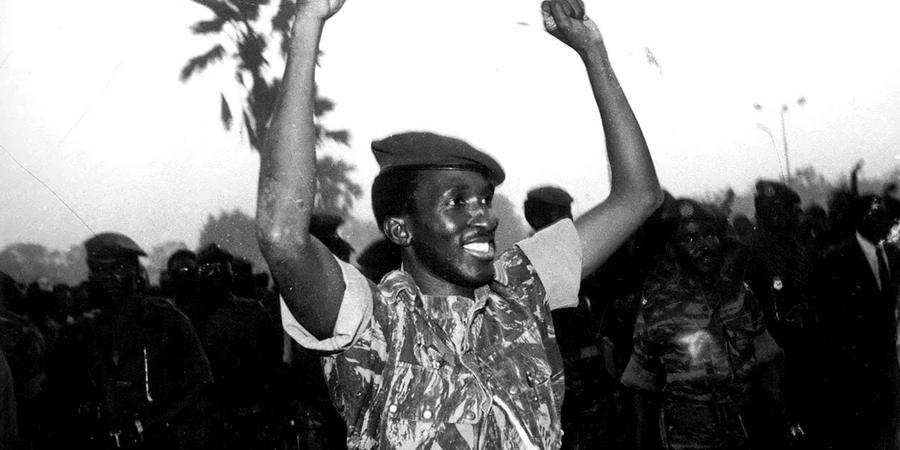
THOMAS SANKARA
The Voice of Africa. The Voice of the World. Nonconformity is the only way forward unless there is a miracle in the political sphere pffff won...
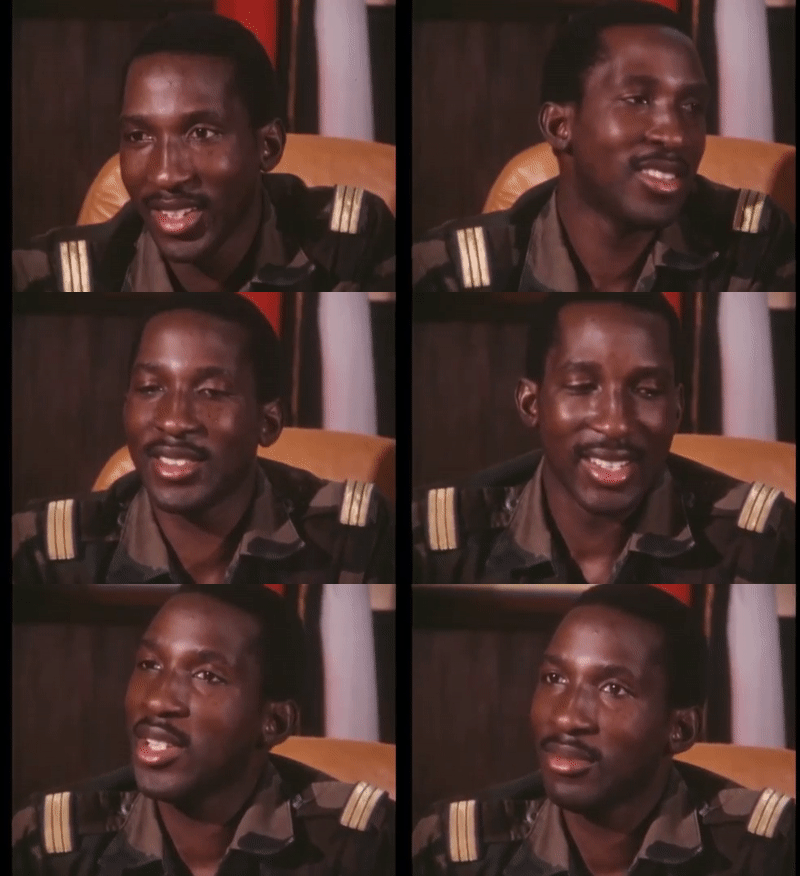
You cannot carry out fundamental change without a certain amount of madness. In this case, it comes from nonconformity, the courage to turn your back on the old formulas, the courage to invent the future. It took the madmen of yesterday for us to be able to act with extreme clarity today. I want to be one of those madmen. We must dare to invent the future. - Thomas Sankara
Under Thomas Sankara’s leadership, Burkina Faso went from being an unknown country to being the envy and center of attention of the world. Here are just a few of what Sankara and his comrades were able to achieve in four short years of leadership:
– A nation-wide program of expanded vaccination called “Operation Vaccination Commando” was carried out between 25 November and 10 December 1984. In two weeks, over 2.5 million children (including children from neighboring countries) were vaccinated and immunized against three deadly epidemics, namely meningitis, yellow fever, and measles. This was a prowess never heard of in Africa before, if not in the entire world.
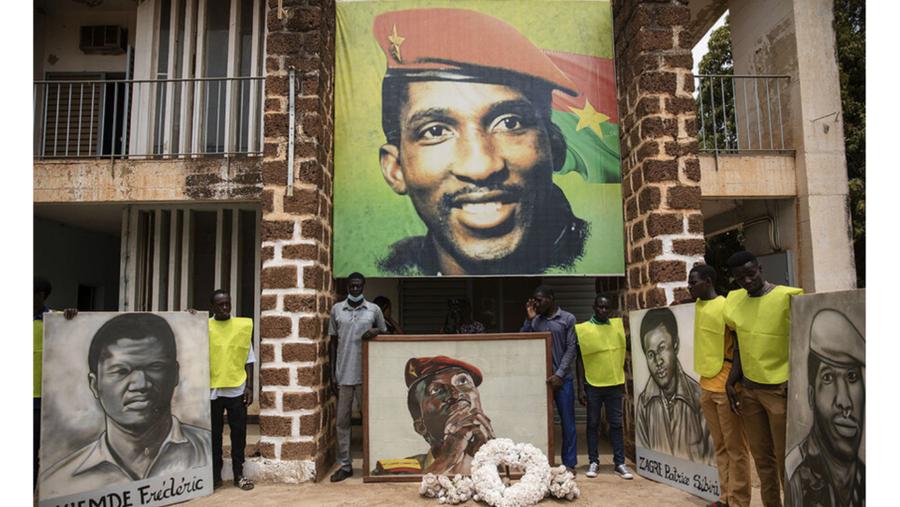
– A nation-wide literacy campaign was initiated, which helped increase the literacy rate from 13% in 1983 to 73% in 1987. School fees became so low during that period that students were coming from many other African countries to study in Burkina Faso.
– Over 10 million trees were planted during Sankara’s presidency to prevent desertification. Sankara made planting trees a non-negotiable condition for entering Burkina Faso, even for diplomats.
– Sankara appointed females to high governmental positions and encouraged them to work in fields that were once exclusively reserved for men. This made Burkina Faso the second country in the entire world to have the highest number of women occupying high leadership and governmental positions.
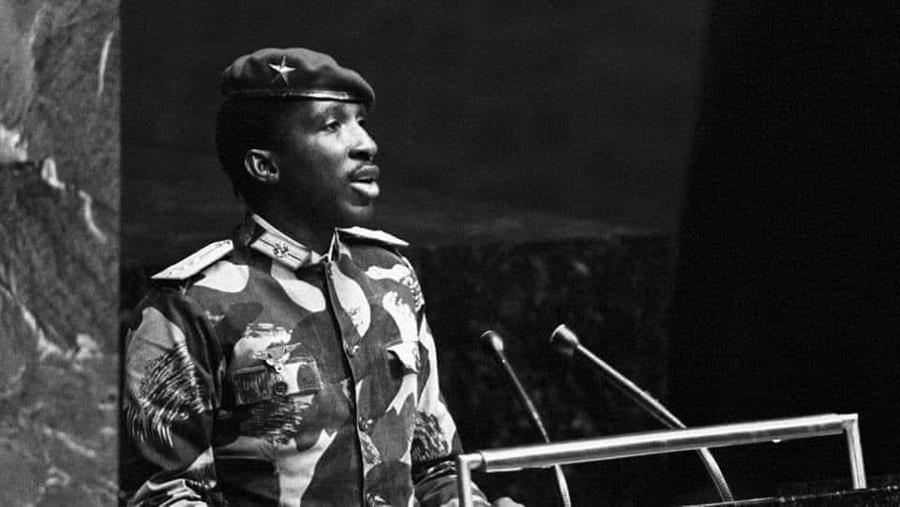
– Sankara supported women’s rights by outlawing female genital mutilation, forced marriages, and polygamy, and job discrimination. Men were also encouraged to do work that was once seen as exclusively reserved for women.
– Land was taken from the feudal landlords and redistributed directly to the peasants. Wheat production rose in three years from 1700 kg per hectare to 3800 kg per hectare. Thanks to this bold initiative, the country was able to achieve food security in less than 4 years of leadership.
These were just a few of the many big positive changes that Burkina Faso experienced as a result of Thomas Sankara’s leadership. But I believe Burkina Faso would not have achieved those results if its leaders had behaved like the leaders of a small and poor country. True, they might have been poor materially, but spiritually and intellectually they knew they were a rich people. They never allowed themselves to be limited by their past or present circumstances. They were realistic, but they also understood that realism is not synonymous with laying low and hoping for the leave and favor of others.

Sankara and his team were ambitious. They dared to dream big. They dared to dream seemingly unattainable dreams. But Sankara and his comrades did not manage to take their country forward in four short years just because they had big dreams. Their achievements were also the result of the fact that their dreams and aspirations were backed by their intention to put others first. In other words, their dreams were others-oriented.
Always think of yourself less…
Thomas Sankara, in particular, was a big dreamer who loved to do things on a grand scale. And he defined himself as someone who dreamed giant, seemingly unattainable dreams. That’s right. Asked who he was and how he would define himself, this is exactly what Sankara said to a journalist in April 1986:
“Defining oneself – that is the most difficult thing to do. First, because you are never sure of making out what you really are. I think there are three ways of being: as others perceive you, as you perceive yourself, and the truth which lies between these two views about the same individual. As far as I am concerned, I am sure that I am an amalgam of projects, convictions, and faith in a future which sometimes requires more than audacity or nihilism. As for the rest, history alone will judge me and define me.”
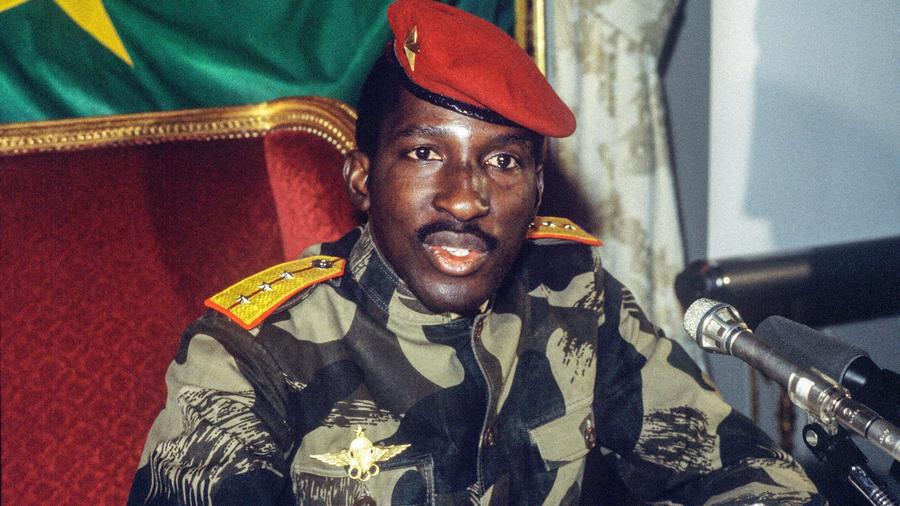
Known for his hard work and his abhorrence of laziness and bureaucracy, Sankara was sleeping less than five hours a day, and often traveled to the remote villages—even past midnight—because he wanted to understand the real conditions of his people.
Sankara did not just ambition to send his country to the Moon. He had tons of other earth-shattering dreams that he never lived to see achieved. Here are a few examples I can cite right off the top of my head:
In the field of automobile and transport, Sankara wanted Burkina Faso to stop importing vehicles and start making its own. Yes, he ambitioned to design and produce a national car, a vehicle completely “made in Burkina.” But not only that. He planned to organize the country’s top artisans and technicians so that in the long run, Burkina Faso could manufacture its own buses, lorries, trucks, and tractors.
As far as agriculture was concerned, Sankara had an ambitious dream as well: he wanted to turn Burkina Faso into a global food superpower. As he said, “Our threefold objective consists in making Burkina Faso go from achieving food security to food self-sufficiency and eventually to becoming a global food superpower.” In less than four years, the first step – food security – was achieved in Burkina Faso.
Inspired by the great man-made river project in Libya, Sankara wanted—in collaboration with Ghana—to link Burkina Faso and Ghana via a canal passing through Akosombo, a small town in the Eastern Region of Ghana.
And the list could go on and on.
Unfortunately, with Sankara’s premature death, these dreams were also aborted. But you get the point: Sankara was a bold dreamer. But he was not just a bold dreamer.
Just like Solomon in the Bible, Sankara’s dreams were other-centered dreams. He did not just dream big dreams, but he also made sure to put others first in his quest for greatness or success. He had always wanted to be a greater blessing to the world as a whole. And he had said it over and over again: “I want people to remember me as someone whose life has been helpful to humanity.”
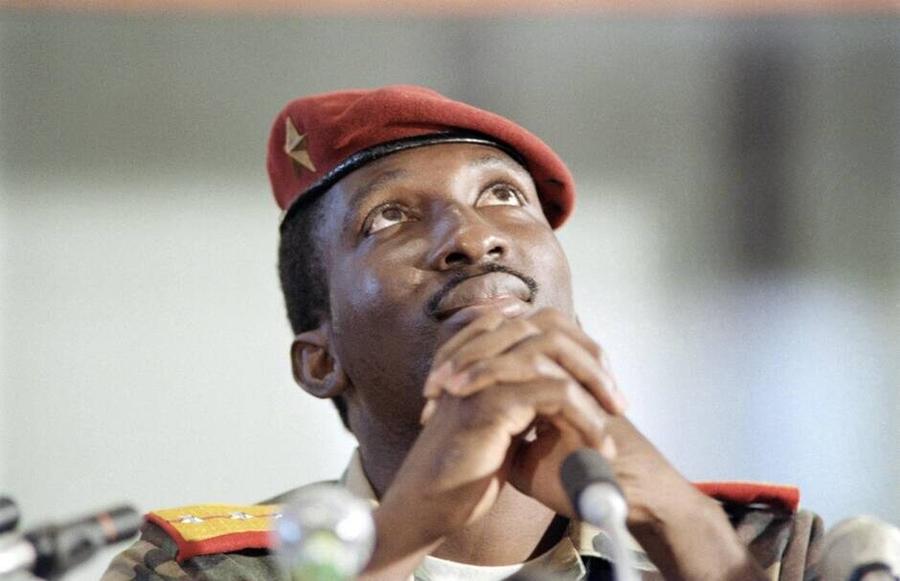
Just like Solomon in the Bible, Sankara did not ask to go to the Moon just for the pleasure of sending someone on the moon. He dreamed of sending his country to the Moon not because he wanted fame for himself or for his own country. He was ready to send his country to the Moon if and only if this endeavor was going to be a contribution to humanity’s advancement as a whole: “...it will really be beneficial if all this scientific progress is put at the service of the peoples of the world.” Only after emphasizing the importance of making this scientific progress beneficial to humanity did Sankara go on to make his request: “You must provide two places to train two Burkinabè cosmonauts. We, too, want to go to the Moon!”
Needless to say, Sankara wanted to be a great man. And just like him, you too have the right to greatness. Whoever you are, you must seek greatness in the area of your selection. And whoever you are, you can easily become great. Why? Because greatness comes from your decision to serve others. And as Martin Luther King Jr., once put it, serving others is something that everybody can do on a daily basis:
“Everybody can be great, because everybody can serve. You don’t have to have a college degree to serve. You don’t have to make your subject and your verb agree to serve. You don’t have to know about Plato and Aristotle to serve. You don’t have to know Einstein’s theory of relativity to serve. You don’t have to know the second theory of thermodynamics in physics to serve. You only need a heart full of grace, a soul generated by love. And you can be that servant.”
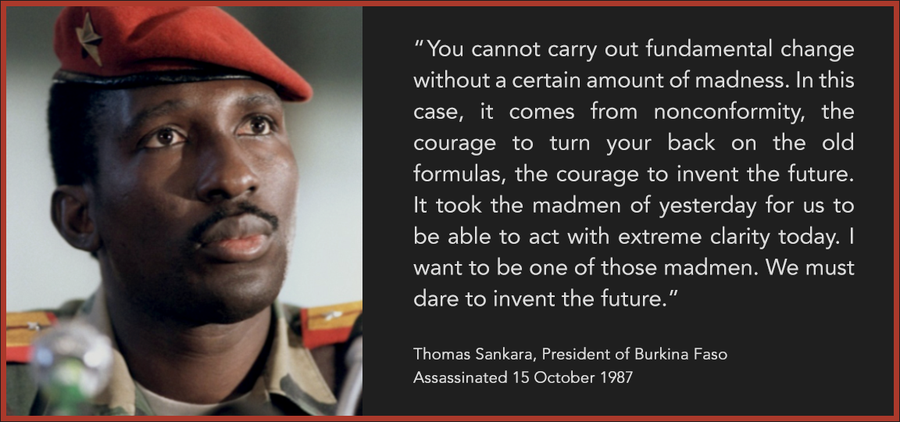
Thomas Sankara’s life was driven by his desire to help others. More than anything, he wanted to create sustainable happiness for humanity. His efforts were geared toward wholeheartedly supporting the poorest of the poor in their struggle for a better, just, and more dignified life. For him, happiness and solidarity go hand in hand, because “selfish happiness contains within itself the bombshell of its own destruction.”
As the president of Burkina Faso between 1983 and 1987, Thomas Sankara refused the presidential salary (which he transferred to an orphanage) and actually lived on a monthly salary of 450 dollars. As president, he was earning less than most of his ministers and collaborators. But he never felt frustrated or insecure because of that. His office was known for its legendary simplicity, but he never felt inferior because of that.
Despite the terrible heat, Thomas Sankara refused to use the air-conditioning in his office, saying, “If most of our people cannot afford this, it’s a shame for me the President to start such a luxury! Until every ordinary person in this country has access to air conditioning, I won’t use one in my office. I’ll sweat. Just like everyone else.”
A lot of political leaders become suddenly rich as soon as they occupy a certain position. Not Thomas Sankara. When he died in October 1987, his most valuable possessions were a car, four bicycles (he loved sports), three guitars (he loved playing the guitar), a fridge with no smell of alcohol (he never drank alcohol or coffee), a broken freezer, and books (he was a voracious reader).
During his presidency, Thomas Sankara had received multi-million dollars’ worth of gifts (including cash and various car brands like BMW, Alfa Romeo, Toyota Cressida, Mitsubishi, etc.) from businessmen and other wealthy heads of state. Sankara deposited all these sums of money at the National Treasury. The vehicles were either transferred to the state automobile fleet or sold and the money used to build social infrastructures. His wife was also the beneficiary of a lot of donations which were all transferred to the Revolutionary Solidarity Fund and the Women’s restaurant.
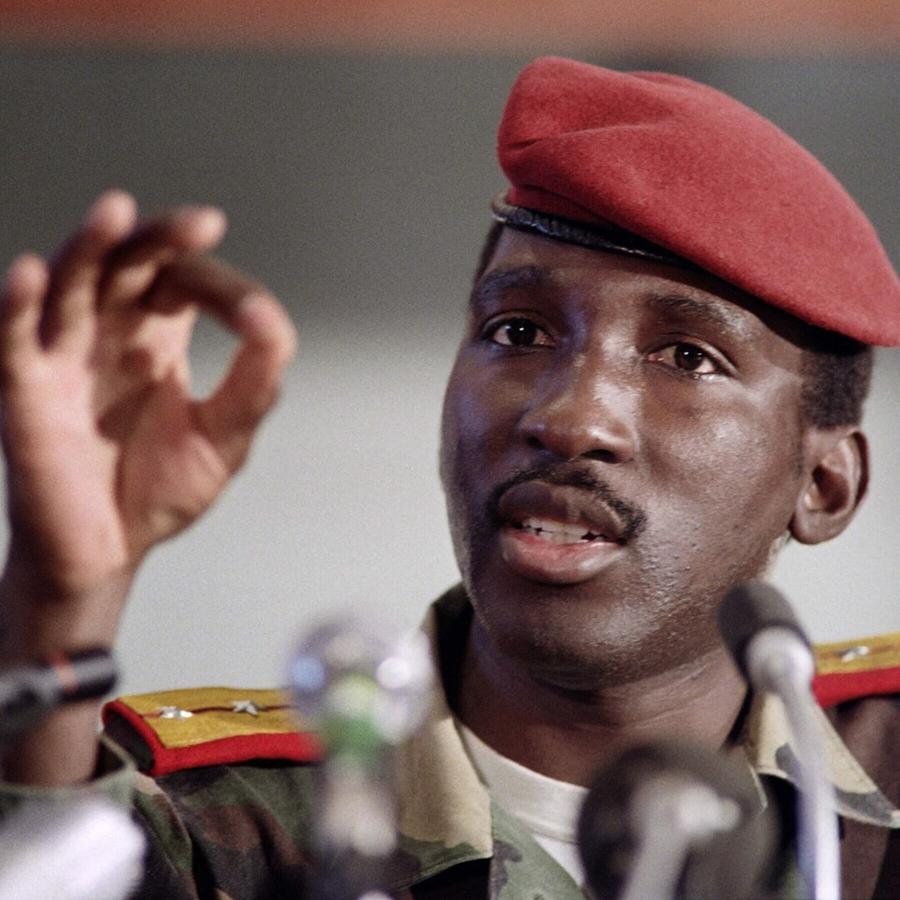
After his historic public declaration of assets—which he made in front of the People’s Commission for the Prevention of Corruption and a large audience on February 19, 1987—Thomas Sankara was labeled as Africa’s poorest president. But that’s not how he viewed himself. You see, Sankara had all the chances and opportunities to enrich himself, he just decided not to do it. He chose to live the austere and minimalistic life of a monk in the midst of a vast ocean of material wealth and opportunities. It wasn’t because he was allergic to luxury or material riches. He cared about the wellbeing of his people: “I am not against luxury. I am not against material wealth; but I want luxury and material wealth for everyone.”
The same philosophy applied to the Revolution he was leading at the time: “Our Revolution is not against what is beautiful. Our Revolution is not against what is luxury. Our Revolution is against beauty and luxury for a minority.”
As you can see, Thomas Sankara’s life was guided by the virtue of thinking of oneself less. That’s right! It’s the virtue of thinking of himself less that led Sankara to consider solidarity as both a right and an obligation toward our fellow humans: “While we are rejoicing and making merry, we must think of those who do not have the opportunity to do so… We have the right, we have the duty, to think of all Burkinabè. While? Because selfish happiness is only an illusion… We must understand and accept the need for solidarity beyond our immediate family, tribal group or village.”
It’s the virtue of thinking of himself less that explains why Sankara was very harsh with his ministers and collaborators, who thought the time had come for them to enjoy the privileges that come with being appointed as high official: “If we proclaim that we are here for all the people, then we should know that while we are living in towns with water and electricity at our disposal, other country mates are elsewhere without anything and, unfortunately, never knew they could even claim betterment. So we’ve got to be sincere and honest with ourselves… It is not normal that some of us have a guaranteed existence and even seek to enhance it while another fraction of the people, long marginalized, is still seeking its right to exist.”
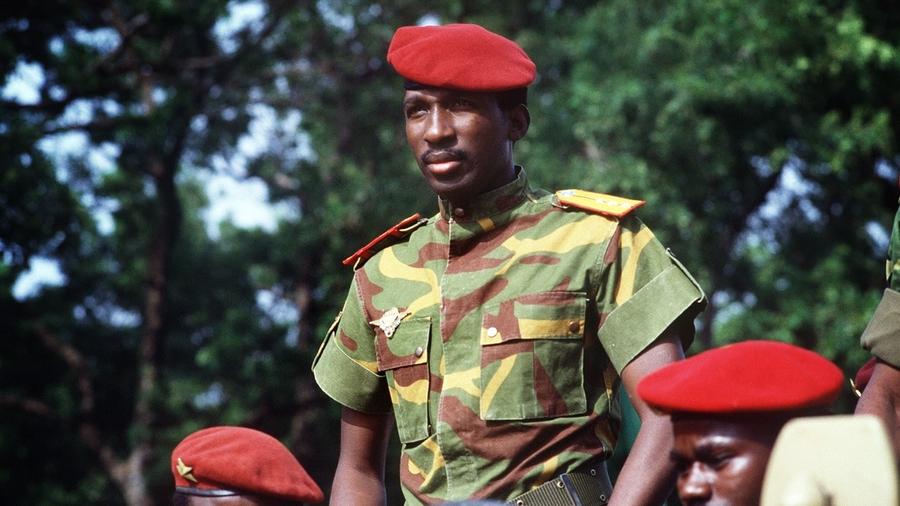
It’s the virtue of thinking of himself less that led Thomas Sankara to make it for his literate compatriots an obligation to place their ability to read and write at the service of the great mass of illiterates: “Anyone who knows how to read will have the duty to teach a certain number of people, otherwise we will take away the opportunity for him to do it for himself.”
It’s the virtue of thinking of himself less that led Thomas Sankara to take into account not only the well-being of the current people, but also of the generations to come: “While it’s normal for man to use all means to live and survive, while it’s is normal for each of us to think about living happily, it is essential that we also take the time to ponder over the fate of future generations.”
It’s the virtue of thinking of himself less that helped Thomas Sankara understand, more than anyone, that “Man’s selfishness is the root cause of the misfortune of his neighbor.” He just couldn’t understand “why we lack money to drill drinking water wells at 100 meters when we have plenty of it to drill oil wells that are 3,000 meters deep!”
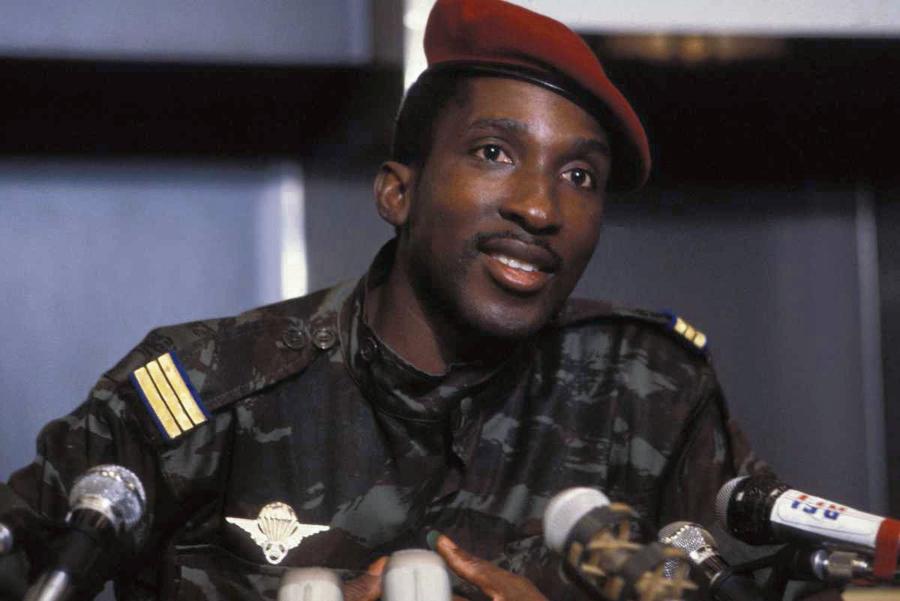
It’s the virtue of thinking of himself less that prompted Thomas Sankara to draw the world’s attention on February 5, 1986 to the urgency to align scientific progress with the need to save the environment and life itself: “We are not against progress, but we do not want progress to be anarchic and criminally oblivious of the rights of others… Let us not turn away from the suffering of others because desertification no longer has borders.”
It’s the virtue of thinking of himself less that explains why Thomas Sankara had no pity for corrupt citizens whom he regarded as the real enemies of the people. As he said, corruption has made more victims in Africa than any major disease you could think of: “We are judging a corrupt man so that we can restore the rights of millions of men. We are therefore fervent defenders of the rights of humans, not the rights of a man.”
It’s the virtue of thinking of himself less that inspired Thomas Sankara to position himself as the voice of the voiceless sufferers : “I speak not only on behalf of Burkina Faso, my country which I love so much, but also on behalf of all those who suffer, wherever they may be.”
It’s the virtue of thinking of himself less that led him to paraphrase José Marti in his speech at the United Nations on 4 October 1984: “We feel on our cheek every blow struck against every other man in the world.”
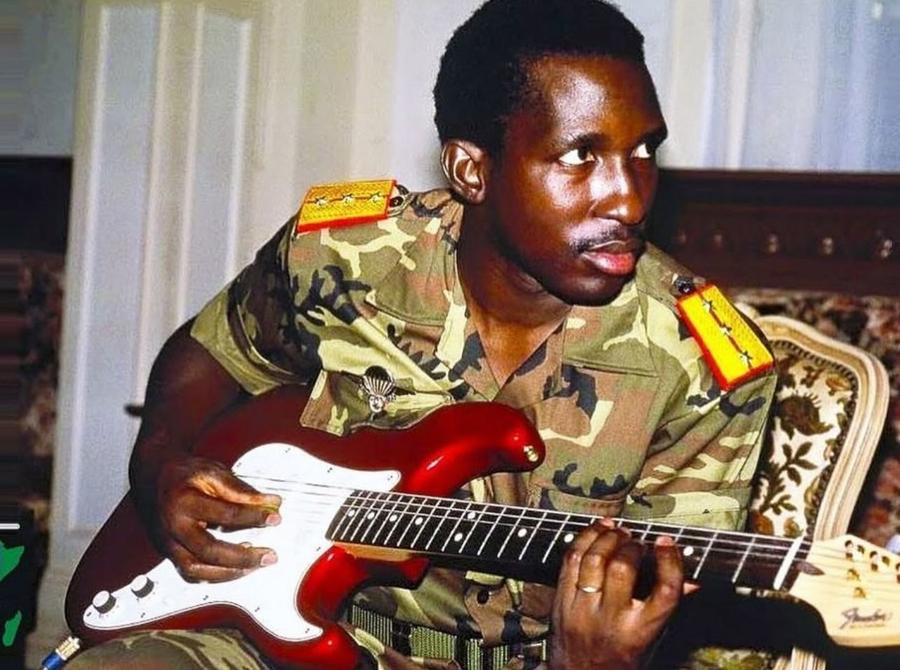
Yes, it’s the virtue of thinking of himself less that explains Thomas Sankara’s sympathy toward the marginalized of the society: “We must all change our mentality so as to accept the marginalized, namely the delinquents, the beggars, and the prostitutes. They did not choose their current fate. They are the victims of a system, they are the products of a selfish and unjust social organization… All these delinquents who hang around, all these beggars who are in the street, they are our brothers; they are our sisters. These are the ones we have rejected out of selfishness. And this selfishness, we are going to fight it in each of us… The beggars who are in the streets, at the edge of hotels and in the market attacking us physically and morally are the consequence of social disorganization, of social putrefaction. We must put an end to this injustice…Our Revolution, instead of individualism and selfishness, develops active solidarity and brotherhood among all members of the society. It is not normal that some of us have a guaranteed existence and even seek to enhance it while another fraction of the people, long marginalized, is still seeking a right to existence.”
So shall it be with you. Whatever your calling in life, dare to go higher. But not only that, make sure that your dream is backed by a strong desire and commitment to uplift your fellow human beings. Make sure that your dream is supported by a burning desire to make the world a better place. That’s something we’re all commanded to do.
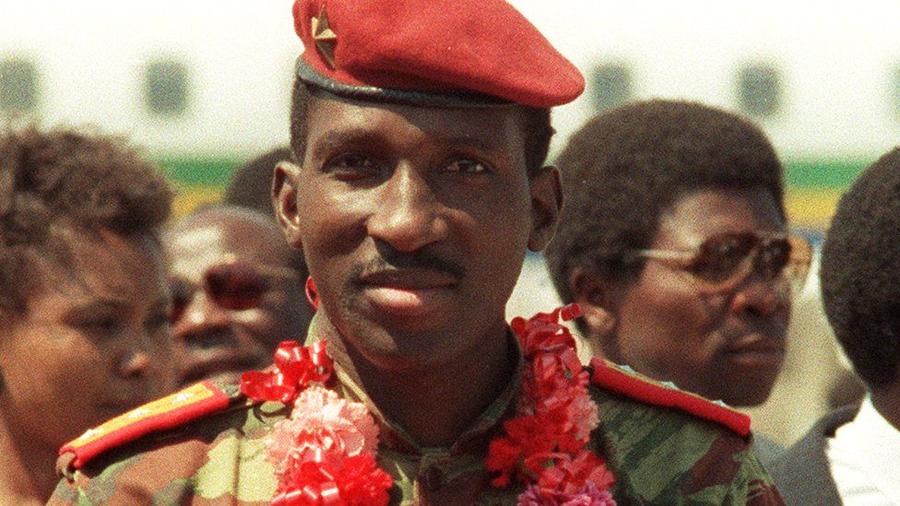
The Universe, as I said it before, is always ready to give a timely favorable response to any bold request we make, as long as what we ask for is connected with uplifting others and making this world a better place for all. Yes, God wants us to never think less of ourselves; yet He always encourages us to always think of ourselves less by thinking more of others.
Every time you rise in thought to greater ideals and to a loftier life purpose, every time you see yourself as capable of achieving anything you put your attention on, you are proving in fact that you are not thinking less of yourself. And every time you seek to elevate others while pursuing your ideals, you are showing that you think of yourself less. When you understand that logic, you’ll understand why dreaming big is not a luxury, but a necessity.
So quit belittling yourself! Wake up and shake off the idea that God has created you to occupy an inferior place in this world. Accept the fact that you have a right to the favors and blessings the King of the universe can bestow on any individual of the human race. Dare to dream big dreams. Not self-centered dreams, but ones that can also benefit other people as well.
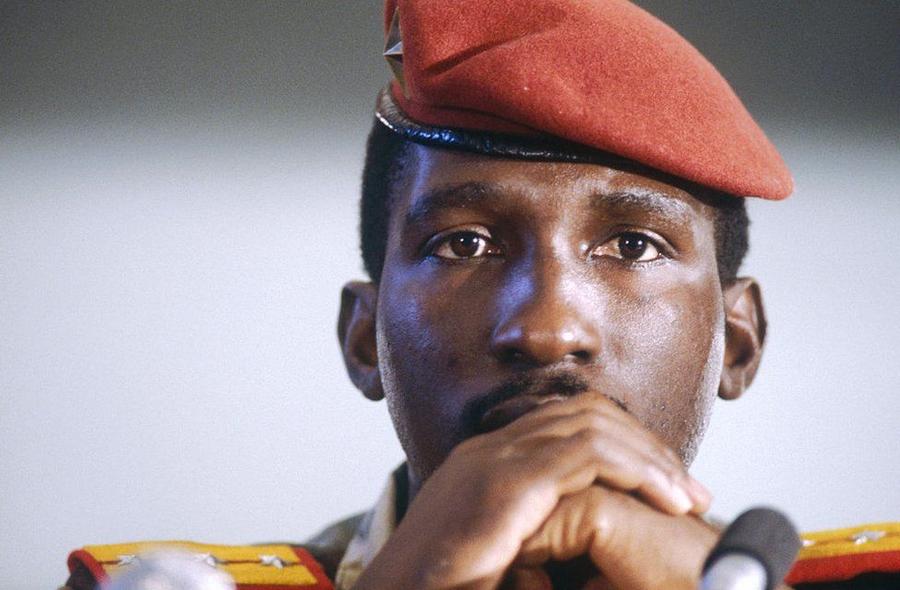
Stop nurturing puny goals and allow yourself the freedom to decide what is possible for you. I mean, let your imagination run wild. Throw all common sense to the wind, and start asking for abundant wealth and influence. You don’t have to think or dream small because you come from a poor background. You don’t have to go around with a poor mentality because you come from a poor country or community.
Whatever your education, background, country or nationality, you have the right to shine. Regardless of your limitations, have the boldness to ask the universe to make you so great, so excellent, and so influential in your field that you will remember a hundred years from now as someone whose life has been useful to humanity.
Whatever your field of endeavor, you must have the boldness to ask the universe to make you so great, so excellent, and so influential that no one can ignore you. Yes! Whatever your calling in life, whatever your field of endeavor, the Universe expects you to do what Edgar Allan Poe once wrote: “dreaming dreams that mortals never dared to dream before!” But it also expects you to put others first in your quest for greatness.
This, in fact, is where the secret of personal and corporate successes lies. Biographies of the world’s greatest industrialists and philanthropists are filled with evidence that dreaming big while connecting one’s dreams to helping others is the secret to enjoying a healthy and lasting success in the business world.
That’s right! There is no other road to business or entrepreneurial success than creating value for others. Success comes as a result of your ability to build and offer something unique that will contribute to people’s lives in a lasting way. In other words, finding workable solutions to real problems that members of the society are facing.
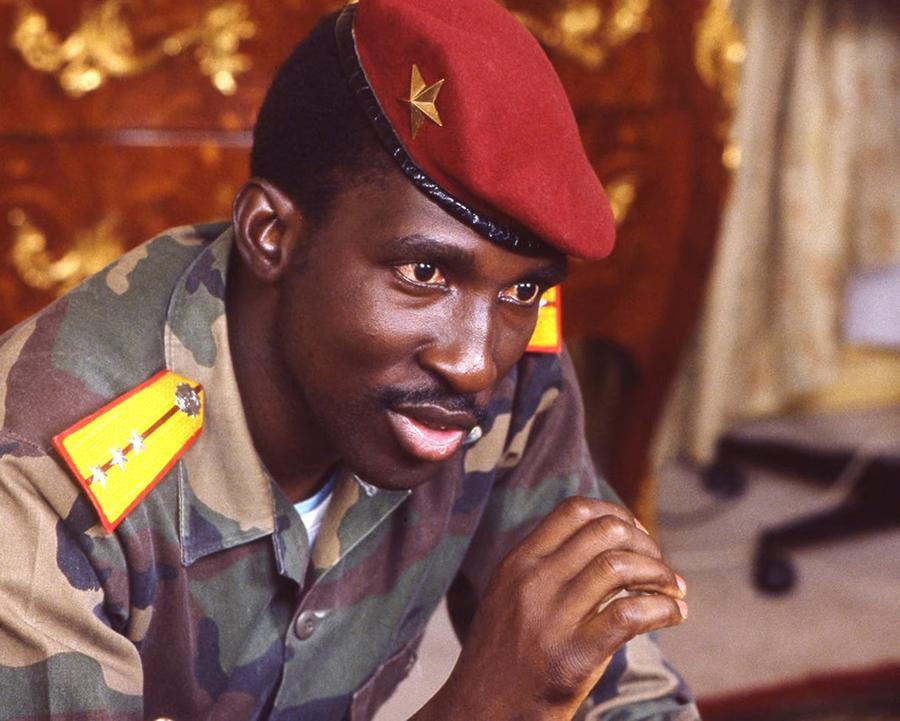
Without that mindset, you will never amount to a successful person in your field no matter how many skills, diplomas or knowledge you have. Ignorance of this truth has led to the premature death of many businesses even though their owners were big dreamers. They paid the ultimate price for not putting themselves on the line for others. They caused their own demise by not truly contributing something of value to those around them.
Again, whoever you are, proclaim with all your might your desire to be great. Stand up and proclaim with Thomas Sankara: “Yes, we too, want to go to the Moon!” Not because of the glory. Not for the sake of being there, high above everybody else; but because you’re convinced that in doing so, there is something beneficial in it for humanity as a whole.
What am I saying? Don’t remain sitting down if you know you can walk. Don’t just walk if you know you can run. Don’t just run if you know you can fly. I mean, don’t ever settle for less when deep down you know that you deserve better. Coming from a poor family background is not an excuse for you to think or dream small. You are as valuable as anyone else, which means that you have the right to dream the biggest dream a human being can possibly dream.
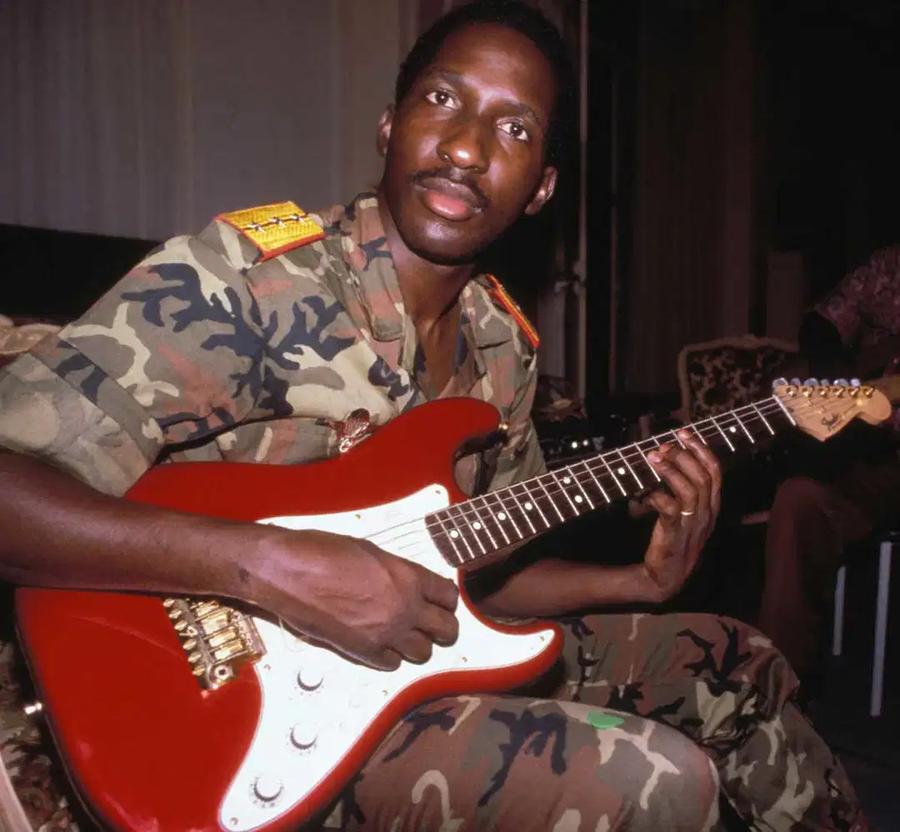
That’s right. So go ahead and embrace a mission greater than yourself. Why? Because just like Thomas Sankara, you too, are commanded to be ambitious. You are commanded to aim for the seemingly impossible. And just like Sankara, you must make sure that your dreams are other-centered dreams. Yes, just like Sankara, you must have the burning desire to achieve big success in what you are doing. Not so you could accumulate fame and popularity for yourself. Not so that you could live a selfish flamboyant life, but because you want to live a legacy-driven life. In other words, your actions must be guided by your intention to make a difference in the world. Your dreams must be driven by your commitment to making a positive impact in as many people’s lives as possible.
True, you might not live to see all your dreams achieved during your lifetime. That’s right! Just like Thomas Sankara, you might not be able to finish the dream, but that’s okay. Life, as Martin Luther King Jr., said, is nothing but “a long, continual story of setting out to build a great temple and not being able to finish it.” But that’s not a reason for us not to dream big. You must commit yourself to a greater life purpose and do it so well that other people will be inspired to continue the work you’ve started.
God bless your soul Thomas Sankara and Thank You and Good Luck.